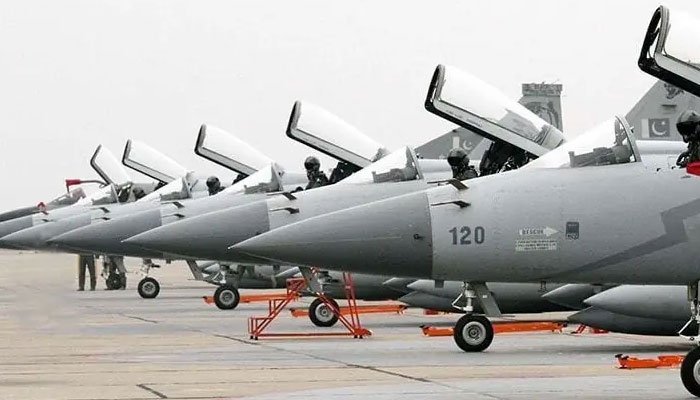
Interestingly, Pakistan Aeronautical Complex holds a 58% share in the joint production of the airframe.
JF-17: How Many Aircrafts Can Pakistan Produce Annually? The JF-17 Thunder has emerged as Pakistan’s most significant indigenous defense achievement, drawing global attention due to its operational performance and export potential. If we compare JF-17 aircraft versus Indian Rafale, JF-17 has shown greater might in the field. It has brought an uncalled victory to Pakistan Air Force and its defense infrastructure globally. After the Indo-Pak conflict in May 2025, Pakistan saw an increasing interest for defense collaboration. It includes Pakistan’s Strategic Mutual Defense Agreement with Saudi Arabia. Recently, there are several orders on table regarding JF-17 fighter jets from countries around the world. Thus, we review Pakistan’s capacity to produce JF-17 fighter aircrafts in a year.
How Many JF-17 Aircrafts Can Pakistan Produce Annually?
Developed jointly by Pakistan Aeronautical Complex (PAC) Kamra and China’s Chengdu Aircraft Industry Corporation, the aircraft was initiated in 1999 after the United States declined to supply additional F-16s to Pakistan. PAC holds a 58% share in the joint production of the airframe.
The annual production capacity is key to ensure quality based product for delivery. It ensures that the aircraft is stable, has complete protective gear and aligns with latest sensors for fighting-in-the-air. Thus, Pakistan currently has the capacity to produce approximately 20 to 25 JF-17 aircraft annually, depending on configuration and export requirements. This production capability allows Pakistan to meet the needs of the Pakistan Air Force (PAF) while also fulfilling export orders for friendly countries.
Interestingly, this capacity can be enhanced three-fold within no time if budgetary constraints are removed. For instance, the engines are procured and assembled. So, it only requires more parts for the assembling to increase the number of JF-17. It can also be increased with joint collaboration with Chinese engineers. Interestingly, Pakistan has already increased its production capacity owing to the increased number of export orders. Some defense sources claim that the current production capacity has already been enhanced to 75 aircrafts annually.
Design, Capabilities & Key Features
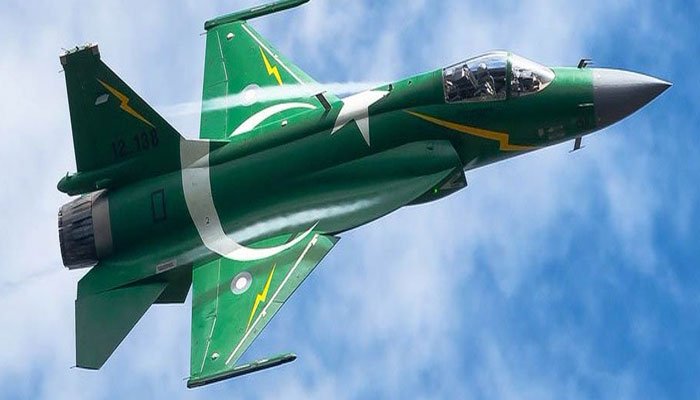
The JF-17 Thunder is a single-engine, multi-role, all-weather fighter designed for both air-to-air and air-to-ground missions. It can fly at speeds exceeding Mach 2, reaching altitudes of up to 50,000–55,000 feet. The aircraft is about 14.9 meters long, with a wingspan of 9.4 meters, and weighs roughly 6,400 kilograms.
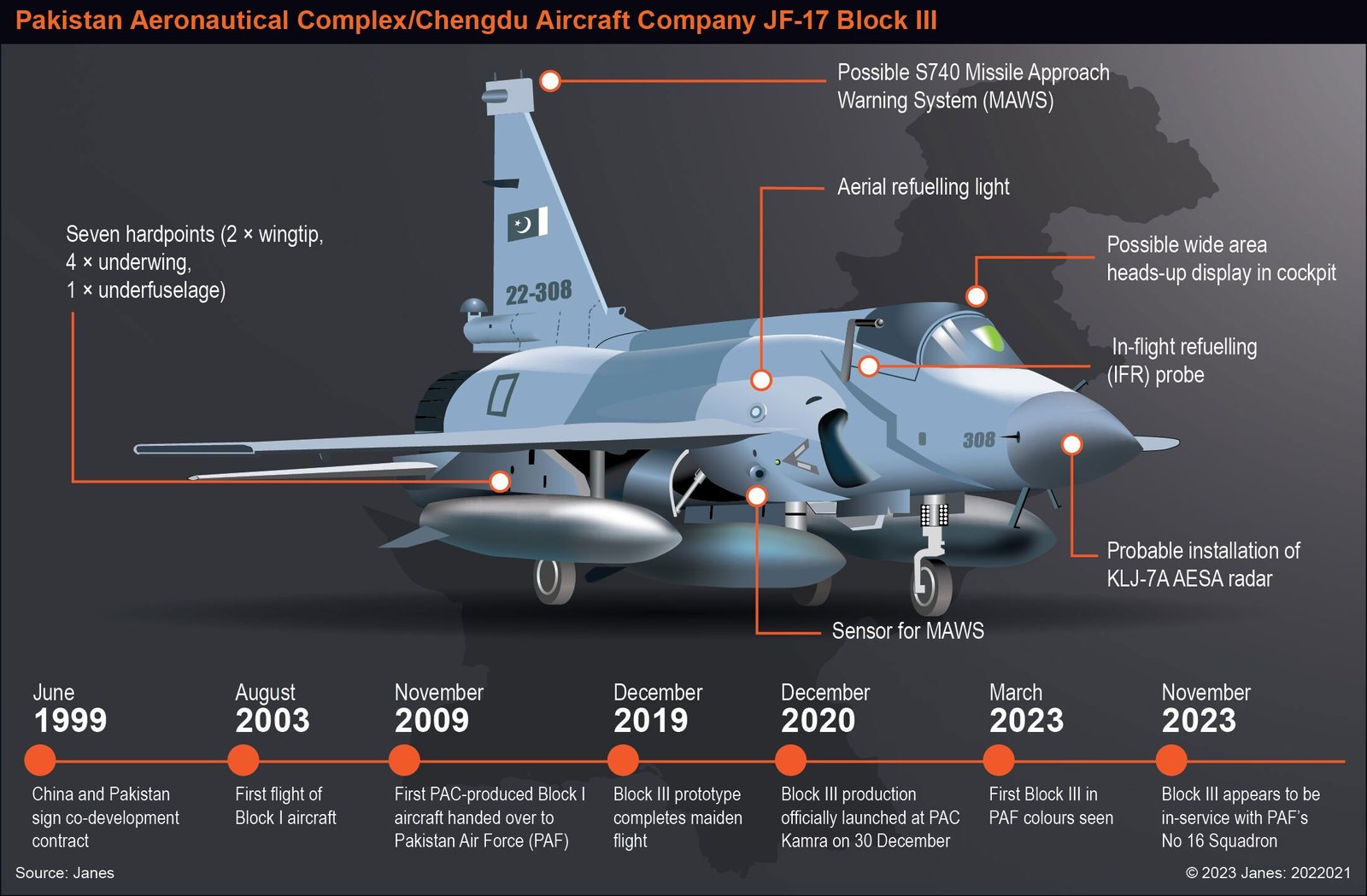
Equipped with modern avionics, the JF-17 features advanced radar systems, dual mission computers, missile warning sensors, and a 23mm cannon. It can carry beyond-visual-range and short-range air-to-air missiles such as SD-10 and PL-9, as well as anti-ship missiles like Exocet, C-801 and Harpoon. The jet is also capable of deploying GPS-guided precision munitions, making it suitable for modern warfare requirements.
Operational Use & Export Success
CHIEF OF THE AIR STAFF BANGLADESH AIR FORCE CALLS ON AIR CHIEF pic.twitter.com/Zjsu1LTX4l
— DGPR (AIR FORCE) (@DGPR_PAF) January 6, 2026
The JF-17 gained international recognition after its operational use during the Pakistan–India aerial engagement on February 27, 2019, when it was flown by the PAF in combat conditions. Since then, interest in the aircraft has grown steadily.
Pakistan has officially exported the JF-17 to Azerbaijan, Myanmar and Nigeria, with Azerbaijan signing a major deal for 40 JF-17 Block III aircraft as part of a multi-billion-dollar defense agreement. Discussions and reported agreements with other countries, including Bangladesh, Iraq and Libya, further highlight the aircraft’s rising profile. Several other states, particularly those with limited defense budgets, have also expressed interest.
Why Countries Prefer the JF-17 Over Western Fighters
Defense analysts note that the JF-17’s growing appeal lies in its affordability, political flexibility and ease of maintenance. Compared to Western fighter jets, it is significantly cheaper to acquire and operate, while offering modern capabilities that meet most air force requirements. Unlike Western suppliers, Pakistan does not impose stringent political conditions, making procurement smoother for many countries.
Experts from institutions like the International Institute for Strategic Studies (IISS) point out that recent upgrades have narrowed the technological gap between Chinese-Pakistani fighters and Western platforms. Local production, training support, and long-term maintenance packages further enhance its attractiveness. The interest in the JF-17 reflects a broader shift in the global defense market, where cost-effective and reliable alternatives to traditional Western systems are gaining ground.