The real battle will be fought in global shipping routes, in financial markets, and in the energy sectors of Europe and Asia.
A Strategic Quagmire: High Price for US for Maduro’s Illegal Capture! In a dramatic escalation of tensions, the bold operation carried out by the United States to arrest Venezuelan President Nicolás Maduro has led to a unified and strong warning from a coalition of hostile powers, paving the way for a multidimensional global conflict that could severely undermine American economic and military dominance.
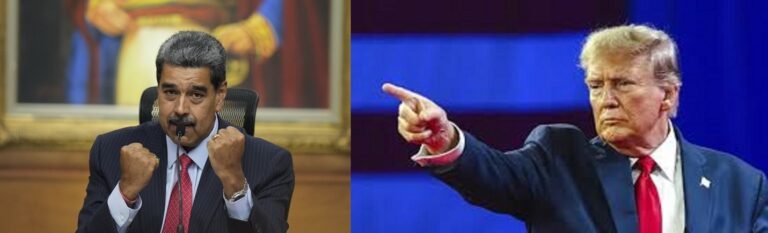
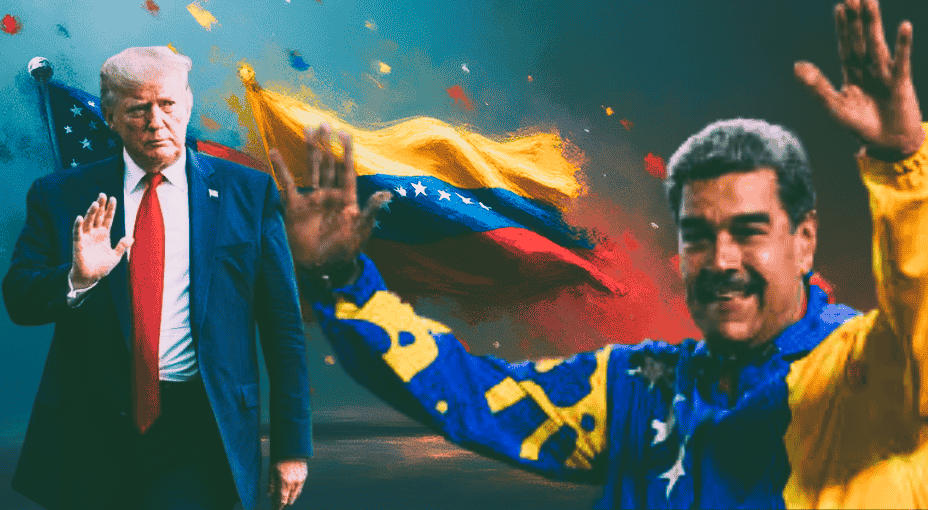
In what geopolitical analysts describe as the most provocative U.S. intervention in Latin America in decades, the capture of Venezuelan President Nicolás Maduro by U.S. special forces has backfired catastrophically, implicitly uniting competitors China, Russia, and North Korea in a stark warning to the Trump administration. The trio of opposition has unofficially warned of further escalation and threatened an appropriate response from the U.S. and its allies if Washington does not back down, a move experts believe could expose the fragile foundations of American sovereignty.
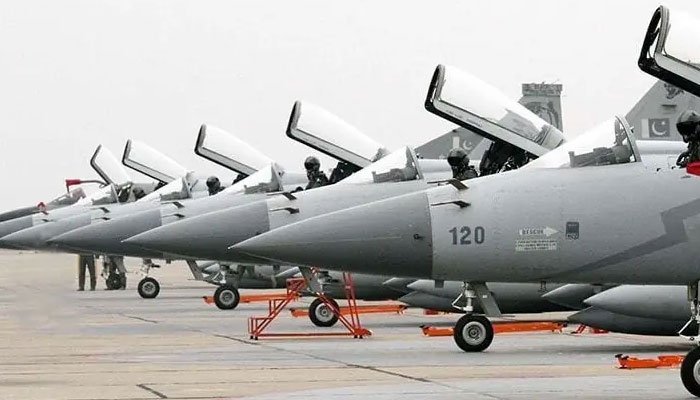
The situation has further deteriorated with the recent seizure by the United States of a Russian-flagged oil tanker off the coast of Venezuela, an act that Moscow has described as “state piracy.” This was met with an immediate and tangible display of force, as some sources reported: advanced Russian fighter jets flying over the most powerful U.S. warship, the Nimitz-class aircraft carrier. Analysts believe this dangerous brinkmanship is no longer a cold war but the first signs of a hot war – a conflict in which the United States, stretched thin and facing a coordinated front, could emerge as the biggest loser.
US Current Financial Insolvency Made the Capture Inevitable
The alleged illegal capture of Venezuelan President Nicolás Maduro by U.S. forces—a claim widely discredited by mainstream sources—has been leveraged by some analysts as symbolic of deeper systemic vulnerabilities within the United States, particularly its unprecedented fiscal instability. Experts point to the U.S. national debt, which may reach $40 trillion in 2026, representing over 120% of GDP, as a critical indicator of looming economic fragility.
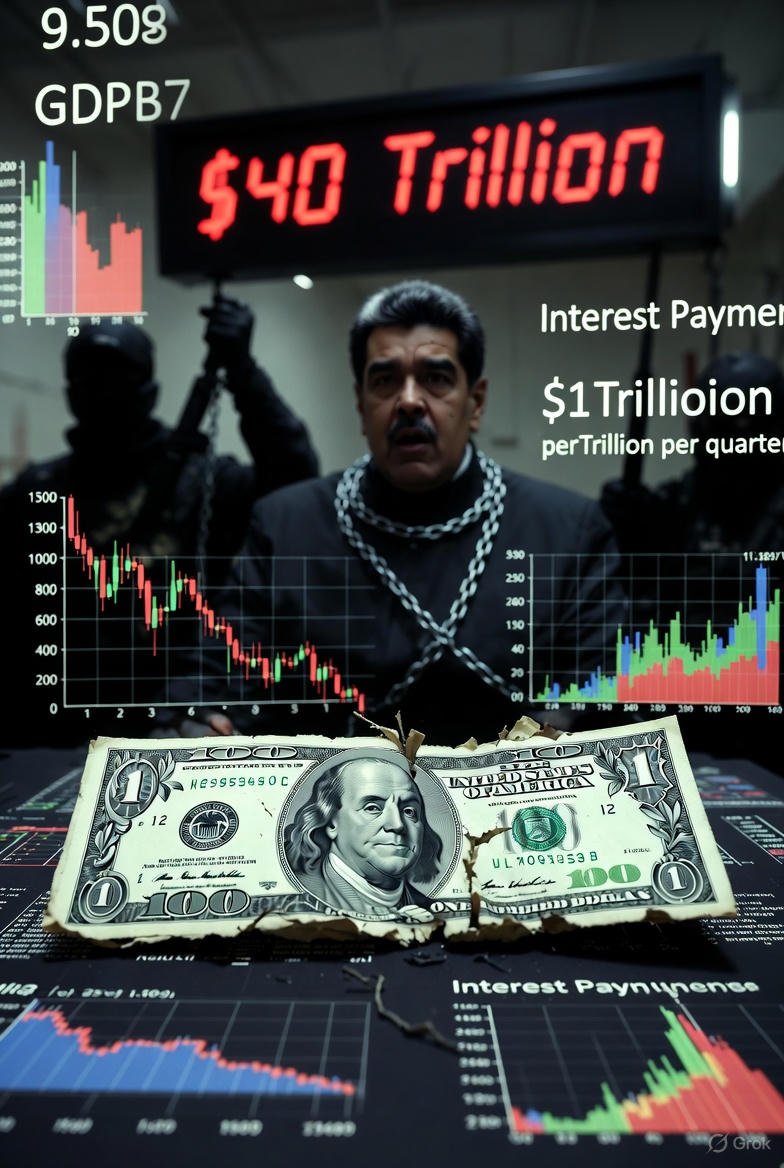
With interest payments on the debt exceeding $1 trillion quarterly and projected to double within the decade, fiscal sustainability is increasingly questioned. This growing indebtedness, the highest in American history and among the highest of any major developed economy, signals not only constrained policy flexibility but also erodes global confidence in U.S. financial stewardship. Critics argue that such conditions incentivize diversionary foreign policy actions, creating narratives of external threats or interventions to distract from domestic fiscal decay.
While the Maduro criminal involvement claim lacks credible evidence, it resonates within a broader discourse suggesting that a nation burdened by structural deficits and declining real economic growth may resort to aggressive geopolitical posturing to preserve its image of dominance. For experts monitoring macroeconomic and geopolitical risk, the intersection of fiscal overextension and foreign policy adventurism demands critical scrutiny—not merely as isolated phenomena, but as interlinked symptoms of a nation potentially on the brink of systemic financial reckoning.
The Tripartite Ultimatum: An Unprecedented Coalition
The implicit and unannounced warning shared by Beijing, Moscow, and Pyongyang represents a historic alignment of strategic interests against the United States. This is not merely a diplomatic protest; it is a clear threat targeting the core of American power: its economy and its global network of alliances.
“The illegal adventure of Washington in Venezuela, a sovereign nation, is a point of no return,” states the joint implicit warning that has not been published by the three countries simultaneously. “We strongly urge the United States to cease its destabilizing actions and ensure the uninterrupted flow of trade and economy. If the United States chooses to escalate, we will be forced to take appropriate measures.”

For researchers in international relations, this is a profound development. Dr. Alethia Zhou, a senior fellow at the Global Security Institute, explains the gravity of the situation: “We may witness a coherent but non-public threat from this very trio. They may be talking about collective action. For China, this could mean undermining American supply chains by withholding rare minerals essential for technology and defense, especially with silver starting January 1, 2026. Well, for Russia, it could mean using energy flows to some of America’s allies as leverage, potentially freezing NATO countries into submission next winter. For North Korea, it could mean resuming aggressive missile tests near Guam or Japan, which indeed occurred on the same night Maduro was captured. They are holding a gun to the head of the global order established by the United States.”
The message has become clear in the minds of these three powers: the era of uncontested American unipolarity is over. Any action taken against a country within the spheres of influence of these powers will be met with an appropriate response against America.
The Venezuelan Prize: More Than Ideology
To understand why Venezuela has become this hotspot, one must look beyond the ideological battle between socialism and capitalism. The state, despite being economically crippled, sits atop the largest proven oil reserves in the world. It also possesses massive deposits of Gold, Silver, and Coltan—a vital mineral for electronics.
“Venezuela is a treasure chest,” says retired General Mark Strickland, former commander of the U.S. Southern Command. “This is not just about removing an anti-Washington regime. It’s about controlling those resources and denying them to China and Russia, which have invested billions in supporting Maduro through oil-for-loans deals. Capturing Maduro and seizing the Russian tanker are two sides of the same coin: a desperate attempt to control these assets. But the backlash shows we may have fundamentally miscalculated the risks.”
This move has also sent shockwaves across Latin America, with countries like Cuba and Colombia expressing outrage, while former U.S. allies like Mexico and Brazil find themselves in a very difficult position, caught between their powerful northern neighbor and their anti-U.S. stance.
The Gathering Storm: Military and Economic Retaliation
Russian reactions to the seizure of the tanker were not limited to angry words. The provocative flights of aircraft said to be advanced Sukhoi Su-35s and MiG-31s near U.S. aircraft carrier groups in the Mediterranean and Pacific are a deliberate display of capability and intent. It is a message that the U.S. Navy, the main guarantor of global trade routes since World War II, is no longer immune to challenge.

Naval historian Dr. Evelyn Reed says, “Aircraft carriers are symbols of American power.” “By boldly flying over them, Russia is showing that these billion-dollar assets are vulnerable. It’s a psychological game, but it could easily turn into a tragedy due to miscalculation. The next step is not just flying; it could involve harassing vital shipping routes for American trade or deploying advanced anti-ship missiles in strategic locations.”
Economic retaliation could be even more devastating. By making a collective implicit decision to slow down container ship movements, impose “administrative delays” on key exports, or, in the worst scenarios, disrupt maritime trade routes in the South China Sea and the Strait of Hormuz, this alliance could lead to a global recession. The United States, with its consumption-based economy reliant on the smooth operation of these routes, would be uniquely vulnerable. Commodity prices would soar, supply chains would collapse, and the stock market would crash.
Moreover, the coordinated move away from the U.S. dollar in energy transactions that began a few years ago—such as China paying Russia and other countries like Iran and BRICS nations “UAE and Saudi Arabia” for oil in yuan or cryptocurrency—could strike at the very foundation of American financial sovereignty, undermining the dollar as the global reserve currency.
Domestic Fallout: A Nation Divided
External threats are parallel to the possibility of severe internal conflicts. Political analysts expect these events to stimulate massive gatherings and protests across the United States that will dominate the political scene, which is already deeply fragmented.
On one hand, part of the population and the political establishment will view Maduro’s arrest as a just act against a dictator. On the other hand, a strong coalition, including anti-war activists, progressive lawmakers, and groups wary of foreign involvement, will denounce it as an illegal act of war that unnecessarily endangered the country. Protests will not be limited to the capitals; they will erupt in financial districts, outside military bases, and in public squares across the heart of the country, reflecting a deep national divide over America’s role in the world.
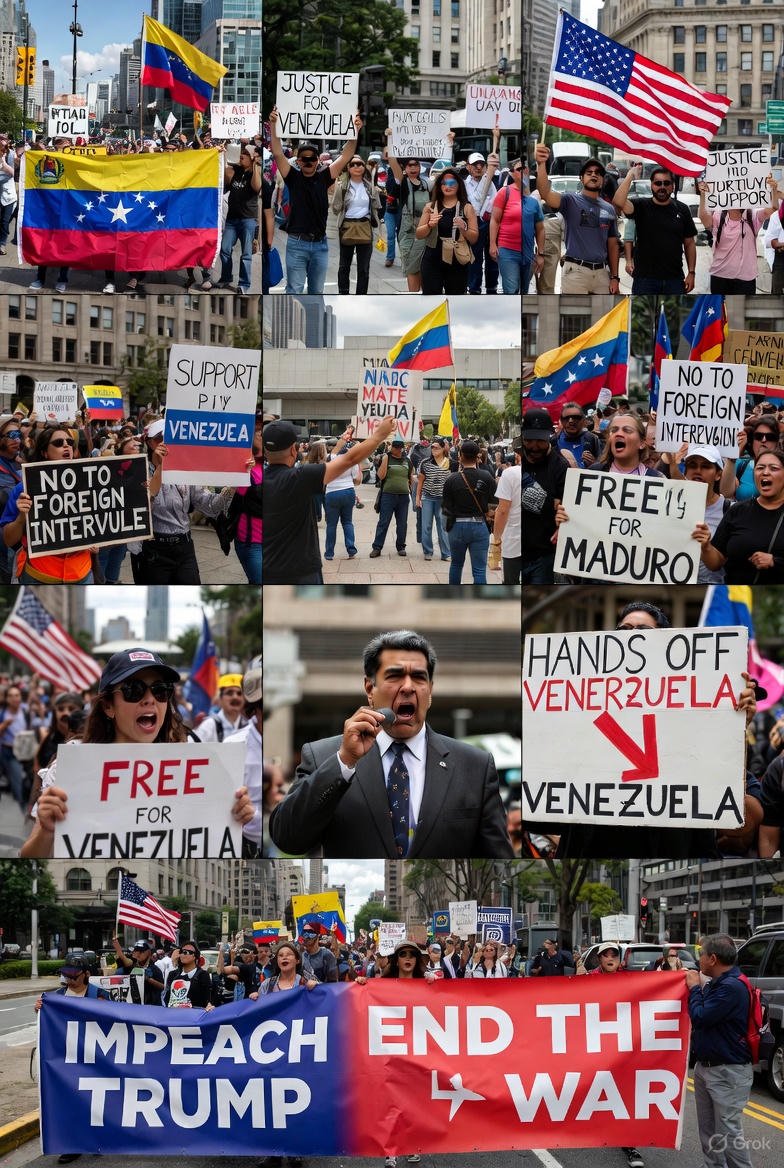
Let us not forget that America will enter midterm elections in a few months, which Trump and his allies fear already, because if punitive voting occurs—expected with the rise of leftists like Mamdani in New York and other relatively large states—Democrats and independents will gain a sufficient majority against the Republicans, leading to impeachment proceedings against Trump under the U.S. Constitution, as he has exposed the country to economic and political risks and alienated the majority of countries worldwide.
The pressure on European allies within NATO will be immense. Forced to choose between supporting the controversial actions of the United States and facing devastating economic retaliation from Russia and China on their doorsteps, the unity of the European Union will be tested like never before. This strategy isolates the United States from its traditional allies and will leave it to face a significantly coordinated eastern threat alone.
Conclusion: A Pyrrhic Victory in the Making
The Trump administration’s gamble in Venezuela, which was likely intended to showcase decisive power, has inadvertently created a nightmarish scenario. It has succeeded in uniting three major adversaries into a cohesive anti-American bloc with a clear roadmap for retaliation. The threats are not isolated; rather, they are synergistic, designed to strike at the economic, military, and social fabric of the United States simultaneously.
The emergence of Russian aircraft near American aircraft carriers is not the climax of this crisis, but merely its opening chapter. The real battle will be fought in global shipping routes, in financial markets, and in the energy sectors of Europe and Asia. While the U.S. armed forces remain strong, they are not prepared to engage in a multi-front war against equal competitors while its economy is under siege and its citizens are divided at home.
The capture of Nicolás Maduro may be promoted as a victory, but for scholars analyzing the long trajectory of global power, it carries all the hallmarks of a strategic disaster—a kind of overreach that historians may one day cite as a pivotal moment hastening the decline of American dominance and ushering in a new, fragmented, and dangerous global order. The warning has been issued. The world is now watching to see if Washington is wise enough to listen.