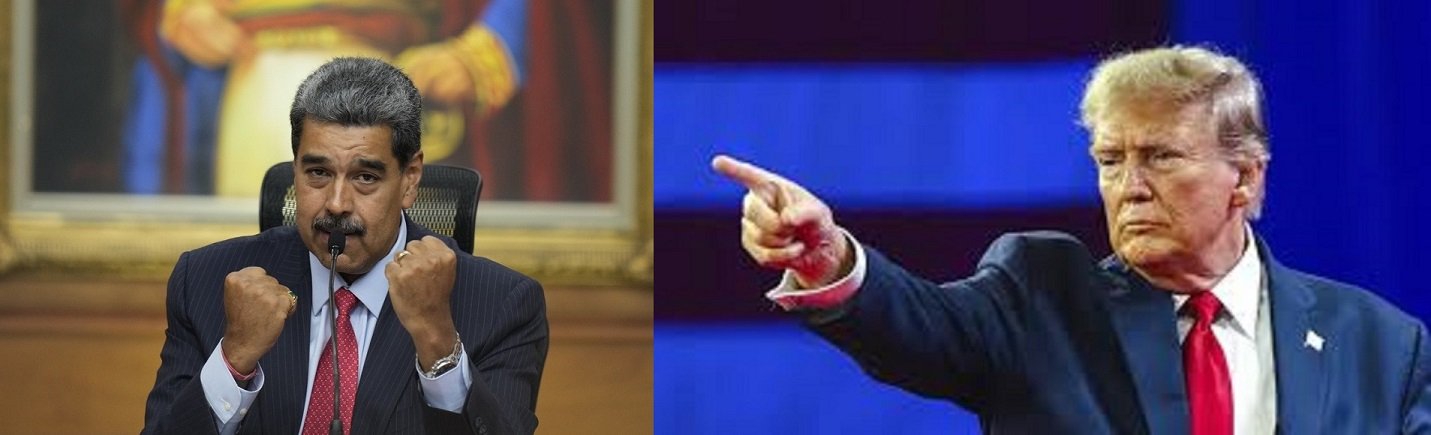
A major change that occurred in modern geopolitics on 3 January 2026 is that the United States has staged a mass military action on the territory of Venezuela, whereby President Nicolás Maduro and his wife Cilia Flores were arrested. Subsequently, they were flown to New York to stand charges related to drug trafficking and narco-terrorism. It wasn’t the first time that US forces were arresting a foreign President. Still, what initially was being reported as an unprecedented extraction operation has quickly developed into one of the most controversial military operations of the twenty-first century leaving a lot of urgent questions about the validity of international law, stability of the area, and the future balance of power in the world.
A Risky Military Game with an intricate Front
The operation, marked by precision attacks on the military targets of strategic importance in Caracas and the intrusion of special troops into strategic government institutions is a huge deviation of the U.S. traditional policy toward Venezuela. The intervention was justified by the Trump administration as a continuation of a larger campaign against international drug traffic and organized crime, arguing that years of Venezuela under Maduro rule had turned the country into a narco-state that threatened the security of the region.
The very size of the mission, including naval deployments, aerial electronic warfare capabilities, and additional military forces indicate a strategic outlook of the U.S. power directly into a sovereign country with no United Nations mandate or even regional approval. This strategy implies the motives which are not restricted to regular law-enforcement activities.
Internal Concerns and External Insecurities
In the United States, the post-aftermath has aroused a heated debate among the population. According to a Reuters/Ipsos poll only about one-third of Americans approve of the military strike, and a sharp partisan divide exists with the Republicans taking a lot of sides, and many democrats and independents worry that the military strike may go too far and lacks any legal basis.
Similarly, President Trump termed the operation a tactical win and stated that the US would oversee a peaceful exit in Venezuela, even suggesting that Washington would run certain parts of the economy and infrastructure of the nation, especially its vital oil industry, in the probable future.
Diplomatic Backlash and International Law
Global response has been very fast and divisive. United Nations Secretary-General António Guterres expressed serious doubts about the legality of the U.S. operation, claiming that it threatens the stability of Venezuela and sets a bad example in future international relations.
The intervention has been condemned by the regional and global powers, such as Russia and China, as a breach of the sovereignty in Article 2(4) of the U.N. Charter and a case of unilateral military intervention. These have been reflected by the Economic Community of West African States (ECOWAS) and the African Union which have called on the need to follow the international norms and a diplomatic solution.
The reaction in Latin America is still heavily divided. Other governments including Argentina have emphasized on restoration of democracy, whereas Brazil, Mexico, Chile and Cuba have criticized the action of the U.S which has been termed as an insult to the Venezuelan sovereignty.
Chessboard Economy, Oil, Sanctions and Strategic Leverage
On top of legal and diplomatic implications, there is an economic game of high stakes in the playing field. The longstanding oil deposits of Venezuela that have been a center of world energy politics are now a center of U.S. strategic planning. There are also some recent developments that indicate that the United States is about to take control over the sale of Venezuelan oil, and some of the sanctions can be relaxed to allow the American transactions to proceed.
In addition, the U.S. is reported to have blocked oil tankers due to violations of sanctions and plans to divert the revenues of oil tankers to the accounts to which Washington has access, which the authorities have introduced as a way to stabilize the economy of Venezuela and benefit its citizens. According to critics, this amounts to economic domination in the name of reconstruction.
Regional Stability: Teetering and Tenuous
The lack of control that the removal of Maduro has already brought in Caracas has already led to confrontations in the city, with drones being reported outside the presidential palace and security forces firing at each other in the direct aftermath of the raid. In the meantime, interim presidency under constitutional order of Venezuela is taken by the Vice President Delcy Rodriguez- this move is the manifestation of the continuing disagreements on the legitimate leadership.
Neighboring nations are fearful of spill over. Cuba is already fighting fuel shortages following decades of Venezuela supplies, Mexico has been an alternative, but with severe restrictions. These changes also highlight how the energy economy in the region is interconnected as well as how vulnerable it is to political upheaval.
The New Precedent: Power, Law and the International System
Legal experts and policy commentators are alarmed on the grounds that what the U.S. did, a move that lacks authorization by U.N. Security Council or a clear self-defense motivation is a violation of the established international law norms. Opponents argue that the interventions that are defined in terms of counter-narcotics rhetoric undermine the pillars that have guided the behavior of interstate relations since World War 2.
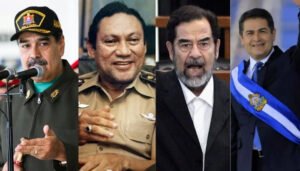
According to supporters, the authoritarian grip of Maduro and his purported action in illegal networks warrant unorthodox actions. They use historical analogies, including that of the U.S. operation in 1989 against Manuel Nito, which was an act of intervening in other countries in the pretext of fighting transnational crimes. However, the magnitude and the geopolitical situation of this recent move make it more contaminating.
Looking Forward: A world Asking Hard Questions
The future of U.S.-Venezuela relations, regional politics, and the international law system is now at stake. Will such an ambitious intervention bring real democratic renewal in Venezuela, or add to instability and resentments throughout the Global 0. Does it mean we are returning to heavy-handed great-power politics or something new about transnational accountability? The question that lingers in the mind of the global community, one that the international institutions are struggling to answer, goes as follows:
Did the U.S. seizure of Nicolás mark the onset of superpower interventionism and what does it mean to sovereign equality in the world order?