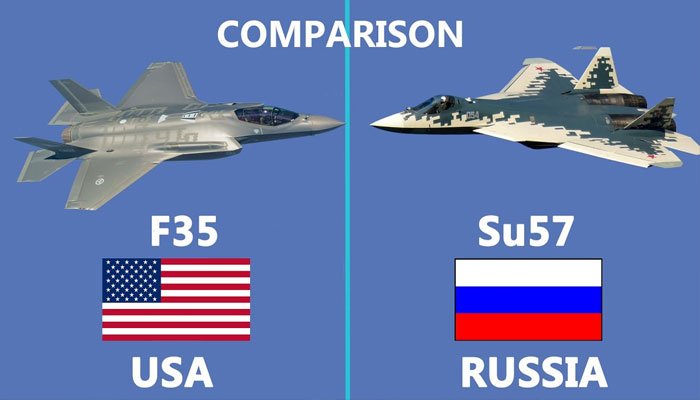
Comparison Between US and Russian Fighter Jets includes design philosophy, weapons systems, speed matrix, maneuverability power in the air. The comparison draws the line of strength between the two powers where United States is a superpower. Nonetheless, Russia has its own strong ranking when it comes to its defense infrastructure. In fact, Russia ranks second only to United States. For instance, United States ranks first with 5,547 combat helicopters and Russia ranks second with 1,543 helicopters.
Similarly, the US and Russia have 14,486 and 4,211 fighter pilots in their respective air forces. When the United States developed its ability of flying fighter jet without a runway with AV-8B Harrier II, Russia also developed its own alternative with Yakovlev Yak-38 Forger. Thus, Russia has equally competed with the United States in the defense infrastructure.
Additionally, the comparison of war capabilities of United States and Europe shows a strong 2.8 million military personnel and 2 million reserves force. Both, the United States and Europe hold huge gaps in terms of their alignment on major global issues. For instance, the recent developments show US interest in occupying Greenland which is a European territory. Thus, the giant defense infrastructure cannot remain focused on external threats. On the other hand, China and Russia are redefining air combat with jointly producing fifth generation fighter jets.
Thus, we see the design philosophy, the weaponry and technology, speed, operational and logistic issues between the American and Russian Fighter Jets.
Design Philosophy
United States of America’s fighter jets reflect a philosophy centered on stealth, advanced avionics, and network-centric warfare. Designers prioritize detection, precision, and information dominance over raw maneuverability or brute force.
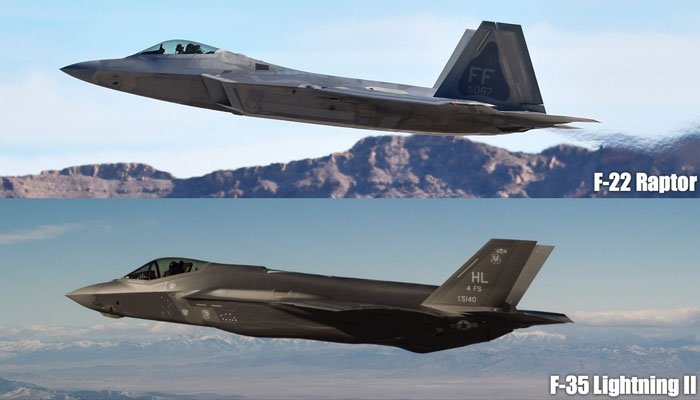
Aircraft such as the F-22 Raptor and F-35 Lightning II emphasize low radar cross-section, sensor fusion, and integration with other assets in the air and on the ground. Pilots can detect and engage targets from beyond visual range, reducing the need for close combat.
Precision strikes, situational awareness, and multirole capability allow a single aircraft to perform air superiority, ground attack, and electronic warfare missions. Stealth features, including radar-absorbent materials, internal weapon bays, and angular airframe designs, help penetrate heavily defended airspace. Advanced avionics, AESA radars, infrared search and track systems, and electronic countermeasures further enhance operational effectiveness.
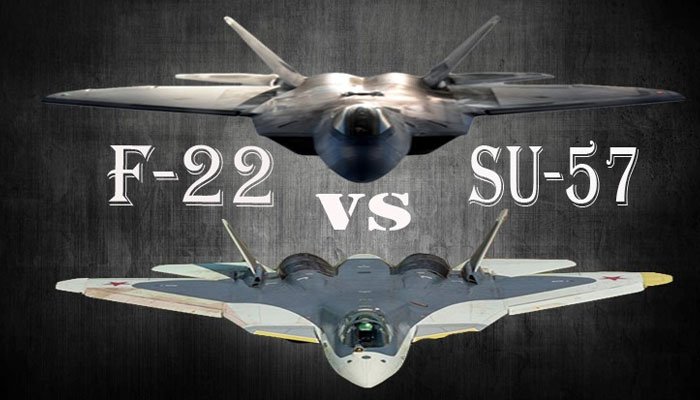
Russian jets focus on speed, agility, and raw firepower. Aircraft like the Su-35 and MiG-35 excel in high-intensity dogfights and operate effectively across vast territorial airspace. Thrust-vectoring engines allow extreme post-stall maneuvers, unmatched by most US jets.
Russian designs also emphasize climb rate, top speed, and heavy missile payloads. While some newer models, such as the Su-57, include low-observable features, stealth is generally secondary to performance and versatility. Russian jets are rugged and can operate from less-developed airfields, giving them flexibility in diverse conditions. Their avionics rely more on pilot skill, although newer systems are increasingly automated.
Interestingly, China is also producing J-36 Stealth Jet which is an advanced 6th-generation stealth fighter jet. Some reports claim that China is assisting Russia on adopting its latest technology in its stealth fleet.
Weapons Systems
Comparison Between US and Russian Fighter Jets shows rare US technique to adopt offensive without being a target. US jets rely on precision-guided munitions and long-range air-to-air missiles such as the AIM-120 AMRAAM. This enables pilots to engage threats at a distance, often before the enemy can react.
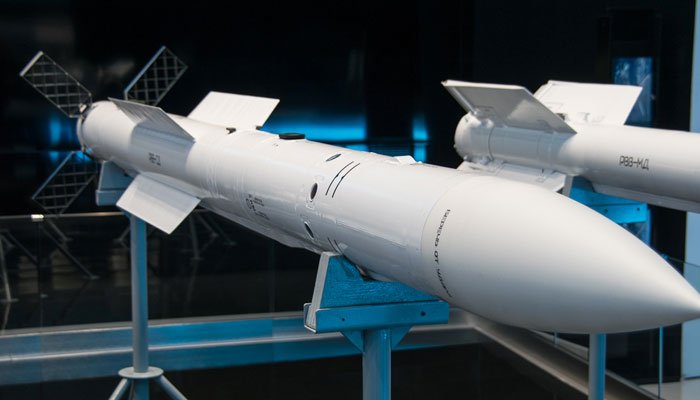
Russian jets carry a mix of long-range and highly maneuverable short-range missiles, such as the R-77 and R-73. Their design emphasizes within-visual-range superiority. Russian aircraft also carry heavier air-to-ground ordnance, increasing their effectiveness in regional conflicts and multirole operations.
Speed & Maneuverability
US jets balance speed with stealth and survivability. Aircraft like the F-22 can supercruise at nearly Mach 1.8, yet extreme dogfight maneuvers remain secondary to controlled agility.
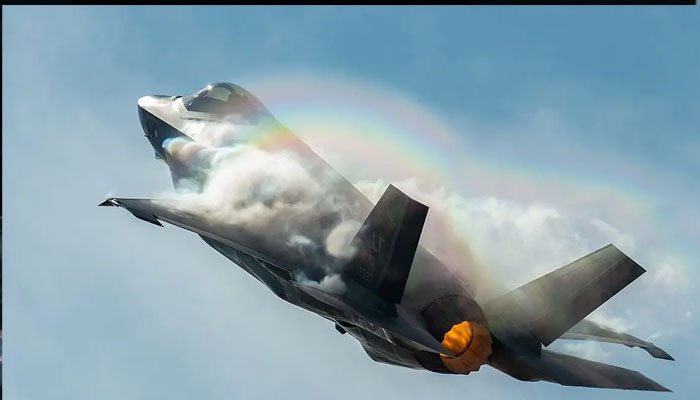
Russian jets, with lighter airframes and thrust-vectoring engines, can achieve similar or higher top speeds. They can perform post-stall maneuvers and other high-agility techniques, giving them an advantage in close combat. These differences reflect strategic priorities: the US relies on early detection and precision strikes, while Russia emphasizes pilot skill, maneuverability, and tactical dominance.
Operational Use & Logistics
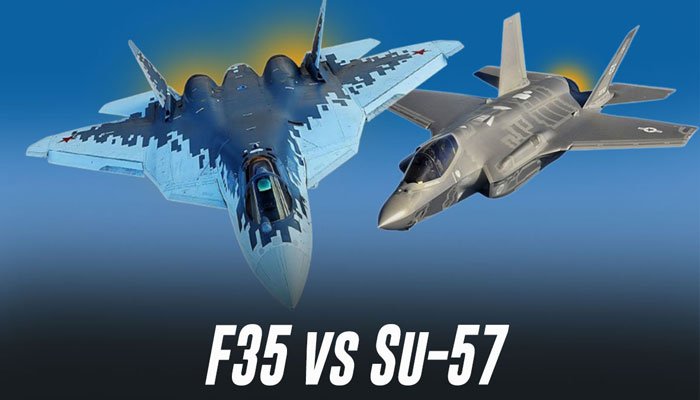
US jets are built for global power projection, including carrier-based operations and allied interoperability. They require sophisticated logistics, extensive pilot training, and advanced maintenance support. Russian jets, by contrast, prioritize defending large territories efficiently. They are easier to maintain, can operate in austere conditions, and cost less to produce. Russian aircraft can be fielded in larger numbers, sustaining long-term operational readiness even under economic constraints.
Comparison Between US and Russian Fighter Jets
The comparison shows us that both United States and Russia hold squarely strong aerial power. Although, the numeric figures support United States. However, Russia remains a large defense equipment producer in the world. Recently, India also halted its defense purchases from the United States. Interestingly, India made the defense purchases from Russia. Thus, it implies that both countries have their unique strengths in the defense equipment.
It is also interesting that US and Russian fighter jets reflect two distinct approaches to aerial warfare. US jets excel in stealth, sensor integration, and long-range engagement, focusing on technological superiority and survivability. Russian jets excel in maneuverability, speed, and firepower, designed for close combat and rugged conditions.
Each approach has advantages and trade-offs aligned with the respective nation’s strategic priorities. While US jets neutralize threats before contact, Russian jets are built to prevail in intense, direct engagements, making each suited to different operational environments and types of warfare.