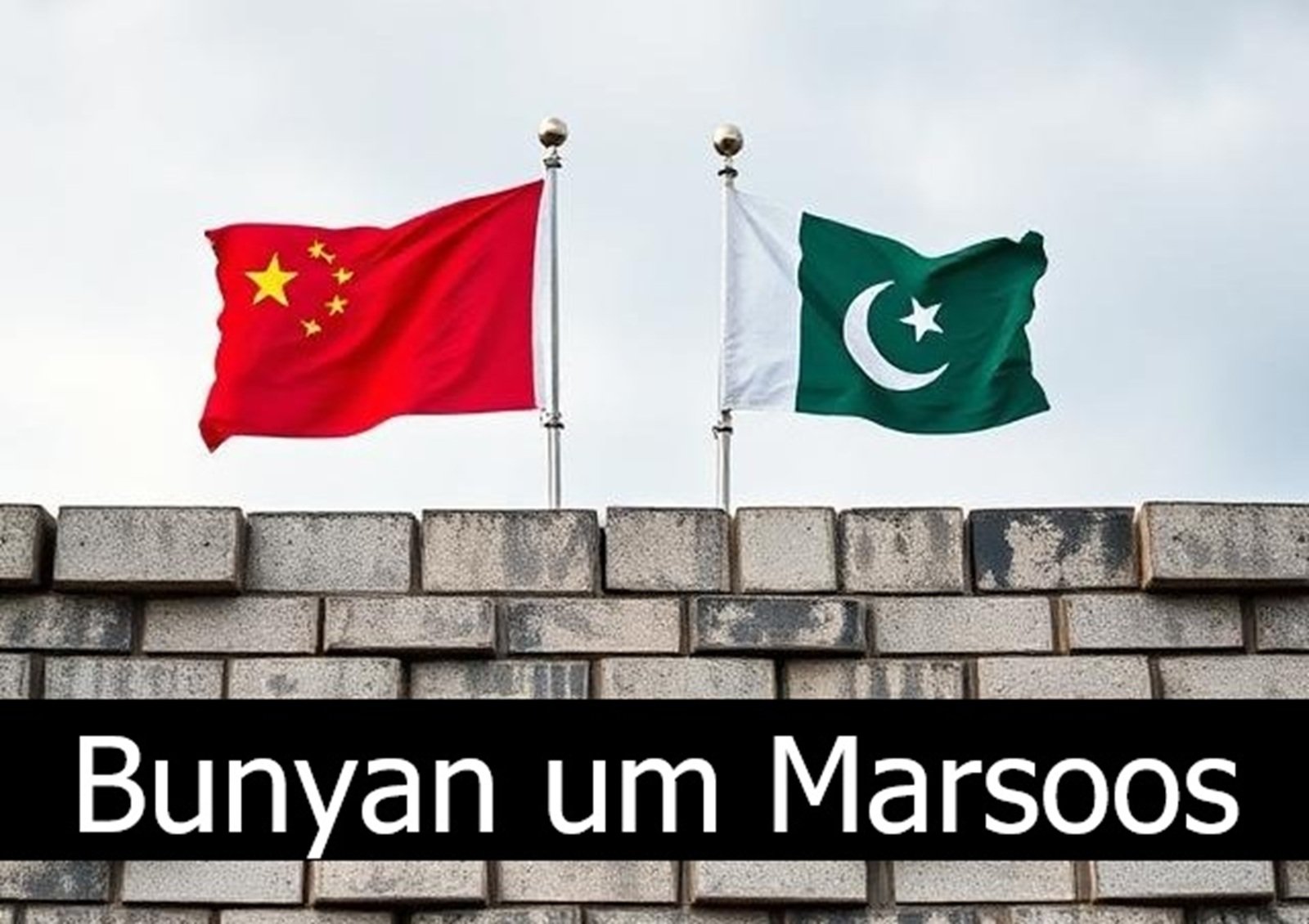
An analysis of the May 2025 India-Pakistan conflict through the prism of ancient strategic wisdom.
The ancient Chinese strategist Sun Tzu once wrote that “the supreme art of war is to subdue the enemy without fighting” (Art of War, Chapter 3). In May 2025, South Asia did not have that luxury. Two nuclear armed neighbors fought a three-and-a-half-day war that shook the entire world. But when the smoke cleared, one thing became evident. Pakistan had not just fought back. It had fought smart. And that difference, as Sun Tzu would have recognized immediately, was everything during Operation Bunyan um Marsoos.
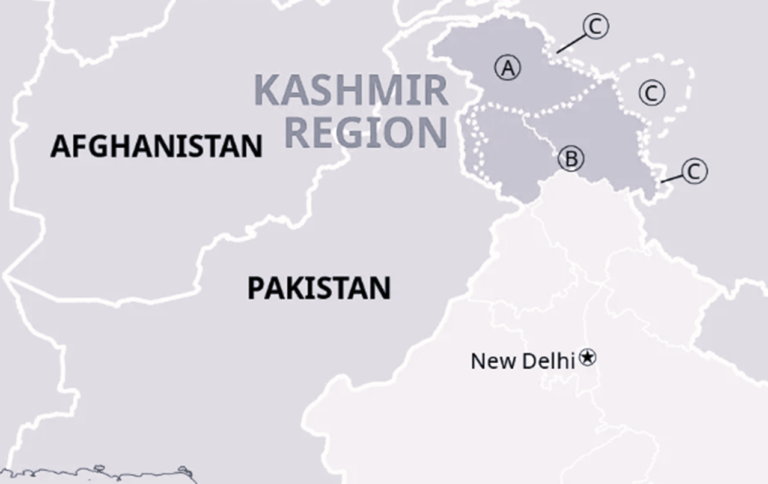
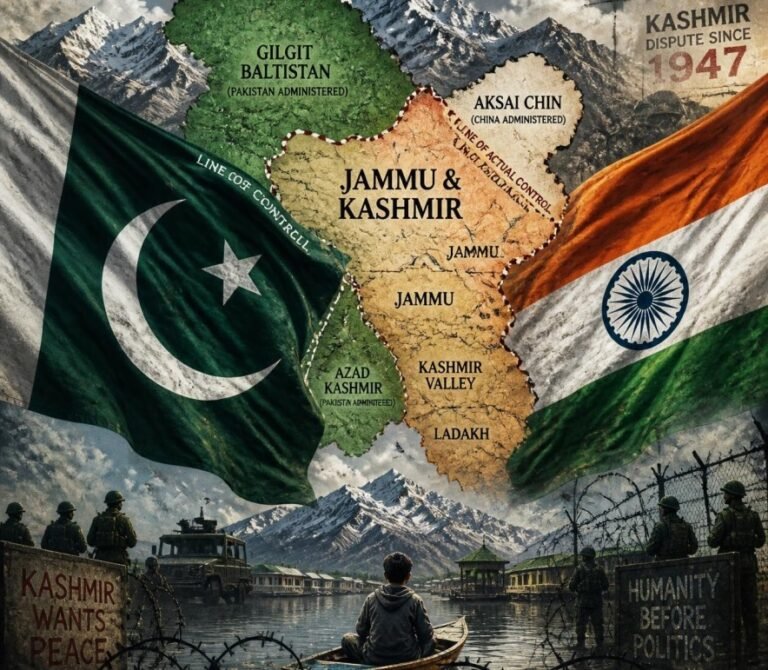
The trouble began on April 22, 2025, when gunmen attacked tourists in Pahalgam, Indian Occupied Kashmir, killing 26 civilians. India blamed Pakistan. Pakistan denied it and asked for an independent international investigation. Without waiting for verifiable proof, India suspended the Indus Waters Treaty, expelled Pakistani diplomats, and on May 7 launched Operation Sindoor. Reuters reported that the International Crisis Group warned the escalation had already grown larger than the 2019 crisis, calling the consequences potentially very dangerous, and noting that emotions were running dangerously high on both sides. Sun Tzu had warned long ago: “Victorious warriors win first and then go to war, while defeated warriors go to war first and then seek to win” (Art of War, Chapter 4). India, driven by domestic political pressure and nationalist sentiment rather than clear strategic thinking, appeared to belong to the second category.
Pakistan’s army has fought real wars for over twenty years. Operations Zarb-e-Azb and Raddul Fasaad were not training exercises. They were brutal campaigns in real mountains, tough terrains, against real enemies.
Principles of Sun Tzu
Sun Tzu’s most famous principle is: “If you know the enemy and know yourself, you need not fear the result of a hundred battles” (Art of War, Chapter 3). Pakistan knew itself very well. Years of fighting Taliban affiliated groups like Fitna al-Khwarij along the Afghan border have given Pakistani commanders a battlefield instinct that simply cannot be taught in a classroom. India, with its larger budget and shinier equipment, had the tools. Pakistan had the experience.
The Pakistan Air Force deserves particular attention. The PAF is not a large air force. But it is a precise, disciplined, and strategically positioned fighting force. Operating Chinese made J-10C jets armed with PL-15 long range air-to-air missiles, and backed by superior sensor integration and network centric warfare doctrine, the PAF entered this engagement better prepared than its larger rival. On the night of May 7, India sent 72 fighter jets into the air. Pakistan sent 42. By any conventional measure, India should have dominated. It did not.
Despite outnumbering Pakistan’s aircraft nearly two to one, India failed to establish aerial superiority. What followed was one of the most stunning air battles in modern South Asian history.
How Many Rafales Were Downed?
The Stimson Center confirmed in its post-conflict analysis that India likely lost several aircraft to Pakistani counterair operations on the very first day, describing these losses as “perhaps the most meaningful military costs India experienced during the entire four-day conflict.” Pakistan claimed six Indian jets were downed including three Rafales, one Su-30, a MiG-29, and a Mirage 2000.
These were not just Pakistani claims. India’s own Chief of Defense Staff General Anil Chauhan admitted to Reuters on the sidelines of the Shangri-La Dialogue in Singapore that India had suffered aerial losses on the first day, saying: “What was important is why did these losses occur and what we’ll do after that,” without specifying numbers. CNN separately reported that a high-ranking French intelligence official privately confirmed that at least one Indian Rafale had been shot down by Pakistan, marking the first ever combat loss of the French built aircraft anywhere in the world.
India and Dassault Aviation, the French manufacturer of the Rafale, fell into a public blame game. France pointed to poor IAF pilot training. India complained that Dassault had refused to share the Rafale’s source code — leaving Indian pilots unable to fully operate their own aircraft.
A Failed Deception
The National Interest reported that India was simply unprepared for the high intensity of the conflict at the start, having bought expensive Western platforms that failed to deliver commensurate battlefield advantage. Sun Tzu had seen this coming centuries ago: “The line between disorder and order lies in logistics” (Art of War, Chapter 7). Expensive jets are useless without proper integration, training, and command clarity. Meanwhile, the Belfer Center for Science and International Affairs noted that the conflict was the first significant live test of Chinese military hardware against advanced Western platforms, and that defense establishments from the Pentagon to NATO were scrambling to understand what had happened in those skies.
Away from the skies, India’s media made things considerably worse. The Wire documented that Indian television channels broadcast headlines like “Justice is served. Jai Hind!” even as they aired unverified claims, blurring the line between real footage and dramatic simulation. tight media restrictions created fertile ground for false narratives to spread, quietly damaging India’s own international credibility. As Sun Tzu wrote, “All warfare is based on deception” (Art of War, Chapter 1), but deception that fools only your own people is not strategy. It is a trap.
Diplomatically, the Atlantic Council observed that the conflict unified Pakistan’s fractured political forces and gave Islamabad a clear diplomatic advantage in the international mediation that followed. Pakistan secured a one-billion-dollar IMF bailout during active fighting and received firm backing from China, Turkey, and Saudi Arabia. A ceasefire was reached on May 10, brokered significantly by the United States, whose senior officials had grown alarmed at how fast two nuclear armed states were escalating.
May 2025 Conflict and Sun Tzu’s Greatest Lesson
The May 2025 conflict established what analysts now call a new normal. Any future threat to Pakistan will be met with a Quid Pro Quo Plus response across every domain: military, cyber, diplomatic, and informational. In fact, Operation Bunyan um Marsoos showed practicality of Sun Tzu’s Art of War.
Sun Tzu wrote that “In the midst of chaos, there is also opportunity” (Art of War, Chapter 6). Pakistan seized that opportunity. The real test now is whether it can convert military performance into lasting political gains: restoration of the Indus Waters Treaty, a UN supervised plebiscite in Kashmir under UNSC Resolution 47, and reinstatement of Indian Constitution Articles 370 and 35A.
Sun Tzu’s greatest lesson was never about destruction. It was about wisdom. “To win one hundred victories in one hundred battles is not the acme of skill. To subdue the enemy without fighting is the acme of skill” (Art of War, Chapter 3). Pakistan came closer to that ideal than India could have imagined. The ancient master would have recognized every move.