As the election timeline shifts and the JAAC rejects a government that has met 37 of its 38 demands, Indian television has found exactly the footage it has waited years for.
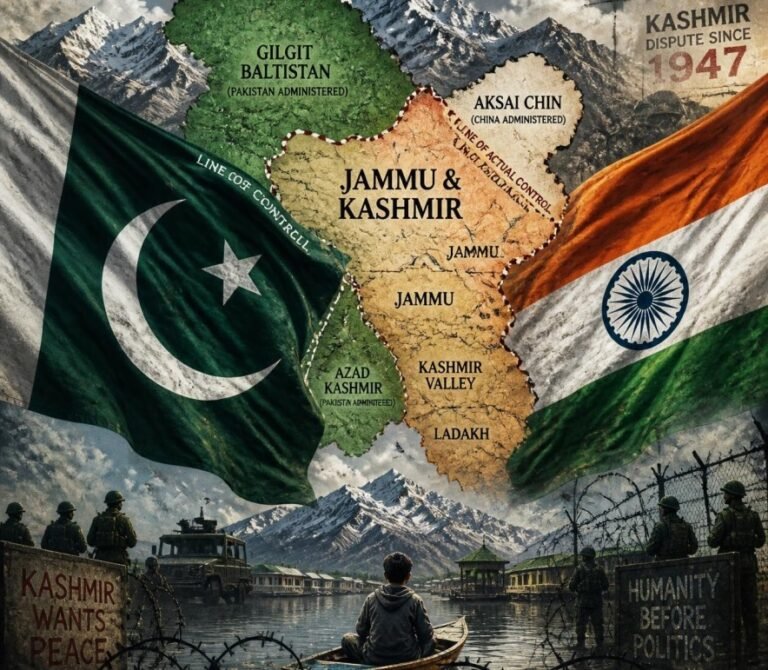
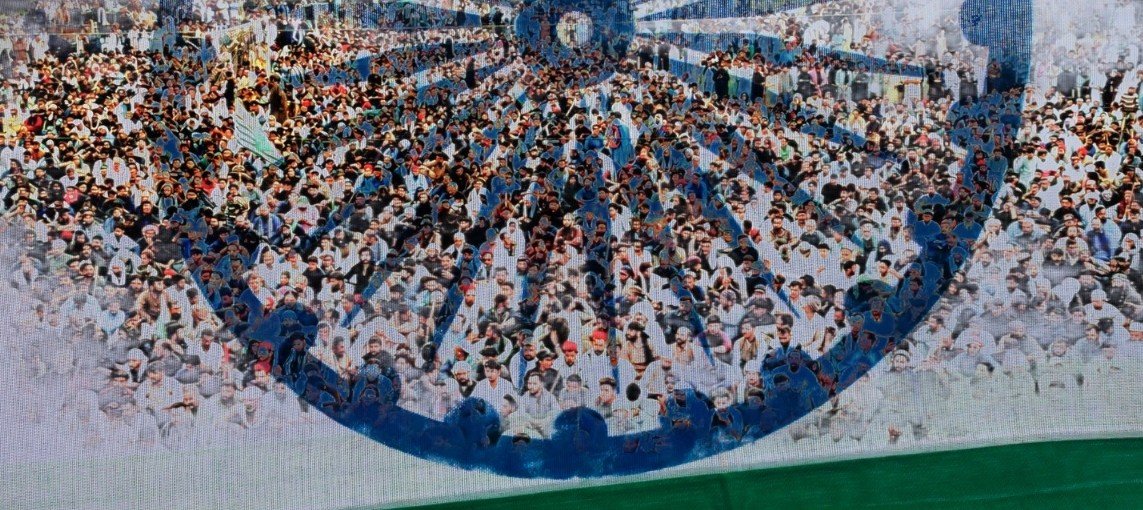
The crisis in Azad Jammu and Kashmir AJK is not standing still. After reports surfaced of an alarmingly low 117 nomination papers filed near the deadline, the AJK Election Commission extended the filing window to June 23, 2026, and submissions have since picked up, with PML-N finalizing a full slate of candidates. That an extension was needed at all, against a wide shutter-down strike since June 9 and movement restrictions around Rawalakot, says more about a movement no longer interested in resolution than about governance failure.
The government insists 37 of the JAAC’s 38 demands have already been met, including annulment of elite perks, hydel power royalties, subsidized electricity and wheat, and a 23-billion-rupee development package. Only one demand remains: abolishing the 12 refugee seats, already rejected by the AJK Supreme Court on constitutional grounds.
The Joint Awami Action Committee JAAC was proscribed under the Anti-Terrorism Act after authorities recovered weapons, communication devices, and documents detailing plans for organized agitation, and after armed individuals linked to the group allegedly fired on law enforcement near the Combined Military Hospital CMH in Rawalakot, killing four personnel.
A government that had conceded 37 demands, cut its own cabinet from 36 to 20 members, and kept negotiations open until June 7 was met with a lockdown timed to the nomination process, not continued dialogue. Whatever grievances animated the JAAC in 2023, the organization today behaves less like a civil society platform and more like a vehicle for sustained confrontation with the state.
India’s Most Useful Asset of the Year
It is precisely this confrontation that Indian media has converted into its most useful asset of the year. PPP Chairman Bilawal Bhutto-Zardari, whose party governs AJK, named the danger directly: he warned the unrest was creating an opportunity for hostile actors, citing what he called the India-Israel nexus, to exploit developments in AJK. His warning was vindicated within hours. Coordinated social media accounts traceable to Indian networks began circulating death tolls with no basis in fact, two hundred killed by Pakistan Army firing, then three hundred. The verified toll, reported by Dawn and Al Jazeera, was eleven: seven civilians and four law enforcement personnel.
The fabrication did not stop at numbers. A video broadcast across Indian news channels as proof of Pakistani forces firing on AJK protesters was traced to an unrelated security incident near the US Consulate in Karachi, recorded three months earlier. A second clip, presented as breaking footage from AJK, was archival material from the 2007 Lal Masjid standoff in Islamabad. Both clips were seeded through networks of fake accounts posing as AJK residents before amplification by mainstream Indian broadcasters, a pipeline that fabricates at the grassroots and legitimizes through television.
India’s news anchors did not merely cover this story. They shaped it to fit a pre-existing script. Arnab Goswami of Republic TV gave sustained airtime to retired Major General G.D. Bakshi, who described the unrest as a strategic opportunity for India rather than a Pakistani domestic matter. Rahul Shivshankar of CNN-News18 and Sudhir Chaudhary of DD News, a state-funded broadcaster, repackaged a dispute over flour subsidies, electricity tariffs, and refugee representation into what they called a freedom movement against Pakistani control language chosen to internationalize a domestic dispute into a question of occupation and liberation.
Ideological Character of Indian Media
This editorial behavior is not incidental. It reflects the ideological character of the media ecosystem producing it. The Rashtriya Swayamsevak Sangh, ideological parent of India’s ruling party, was described in a major New York Times investigation in December 2025 as an organization whose enduring goal is reshaping India into an exclusively Hindu nationalist state. The US Commission on International Religious Freedom has recommended India be designated a Country of Particular Concern for 2026. In the 2026 World Press Freedom Index by Reporters Sans Frontières, India was ranked 157th out of 180 countries, dropping six places from 151st and classified as very serious (RSF, May 2026). A media establishment operating under those conditions has no credible claim to moral authority over governance in AJK.
None of this excuses the JAAC’s own conduct. A protest movement that rejects negotiated settlements after 37 of 38 demands are met, times its most disruptive actions to electoral deadlines, and has drawn individuals willing to use firearms against law enforcement has moved beyond civil advocacy. The ban followed documented escalation, not preemptive suppression. What the JAAC’s continued agitation has done, intentionally or not, is supply India’s information warfare apparatus with exactly the raw material it requires: real unrest, real bloodshed, and real footage that needs no fabrication to be damaging once stripped of context.
Pakistan’s Interests and the Kashmir Cause
AJK Prime Minister Faisal Mumtaz Rathore has said that decisions affecting the future of the state should be taken through representative institutions rather than street agitation, and that many JAAC members themselves favor a negotiated settlement. That is the path protecting both Pakistan’s interests and the Kashmir cause.
Every additional day this confrontation continues with the electoral calendar disrupted, internet access restricted, and Indian cameras rolling is a day handed, free of charge, to a propaganda machine that has spent decades waiting for exactly this kind of opening.
As South Asia remains one miscalculation away from war; the actions of Joint Awami Action Committee are an opportunity for India to further disrupt the rights of Kashmiris in Illegal Indian Occupied Kashmir.