Quiet diplomacy in Colombo and renewed calls from Srinagar suggest that dialogue, not isolation, may be the only realistic path forward for South Asia.
“You can change your friends, but not your neighbours.” (Atal Bihari Vajpayee former Indian PM). He made this argument after India’s 1998 nuclear tests, framing it as a reason for India and Pakistan to find a way to coexist rather than remain permanently hostile
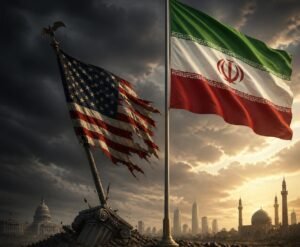
For decades, the United States and Iran have been described as bitter enemies, fighting proxy wars and trading sanctions and threats. Yet history shows that even the deepest hostilities can give way to negotiation when both sides decide that talking serves their interests better than fighting. Reports of renewed efforts to revive US-Iran dialogue are a reminder that no rivalry is permanently frozen. This raises an uncomfortable but necessary question for South Asia: if Washington and Tehran can sit across the table, why do India and Pakistan, two neighbors bound by history, culture, and geography, struggle to do the same?
This question was recently raised by Mirwaiz Umar Farooq, the senior Hurriyat leader from Srinagar, who pointed to the US-Iran example while appealing to India’s leadership to choose dialogue over confrontation. He said wars do not resolve disputes, and that it is only through dialogue that issues are addressed (Kashmir Media Service, June 30). His remarks deserve serious attention, because they restate a truth that policymakers on both sides often avoid.
India Pakistan Dialogue in Colombo
Interestingly, while public rhetoric between the two countries remains hostile, quieter channels appear to be active. Pakistani and Indian officials held a rare meeting in Colombo last week, under what is known as a Track 1.5 dialogue, involving former diplomats, retired military officials, and politicians from the ruling alliances of both countries (The Express Tribune, June 26).
Sources reported that the gathering also included a former Indian Army chief and a retired two-star Pakistani military officer who has been involved in backchannel efforts since leaving service. While such unofficial interactions have taken place periodically since last year’s four-day conflict between the two countries, So, that it is unusual for individuals so closely tied to serving officials to take part.
The primary objective of the Colombo talks was to strengthen mechanisms for communication during crises and explore measures to prevent and manage future escalations. Both sides reportedly exchanged notes and held frank discussions on terrorism and water, two of the most sensitive items on the bilateral agenda, and explored ways to feed insights from these discussions into formal Track One channels, meaning direct engagement between serving government officials.
Public Position vs Actual Groundwork
This is significant. Track 1.5 dialogues are often where the groundwork for eventual formal talks is quietly laid, even when public positions remain rigid.
Many observers, including some in India, now believe that Delhi’s policy of seeking Pakistan’s diplomatic isolation has not produced the desired results. Since last year’s conflict and Operation Bunyan um Marsoos, Pakistan’s geostrategic profile has continued to rise. Moreover, the recent Iran crisis has further enhanced Islamabad’s relevance on the regional stage.
Against this changing backdrop, a view is reportedly emerging in some Indian circles, including voices associated with the RSS, that Delhi may need to revisit its approach toward Islamabad. If accurate, this shift in thinking, even at an early and informal stage, is exactly the kind of opening that genuine dialogue requires.
Kashmir – The Actual Cause
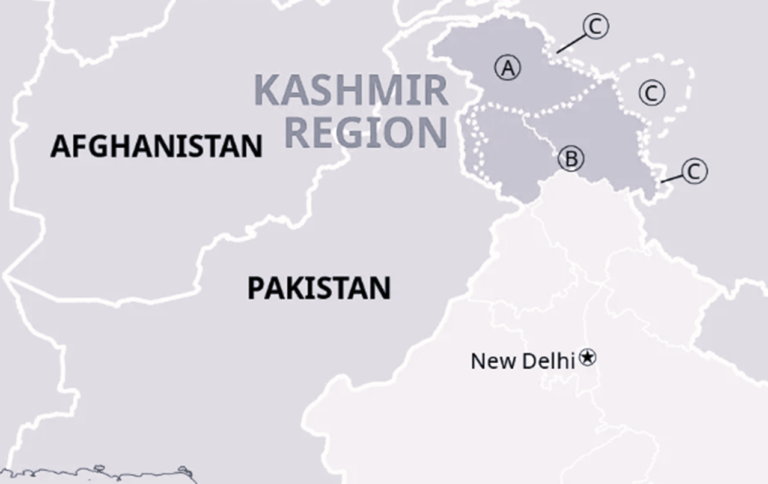
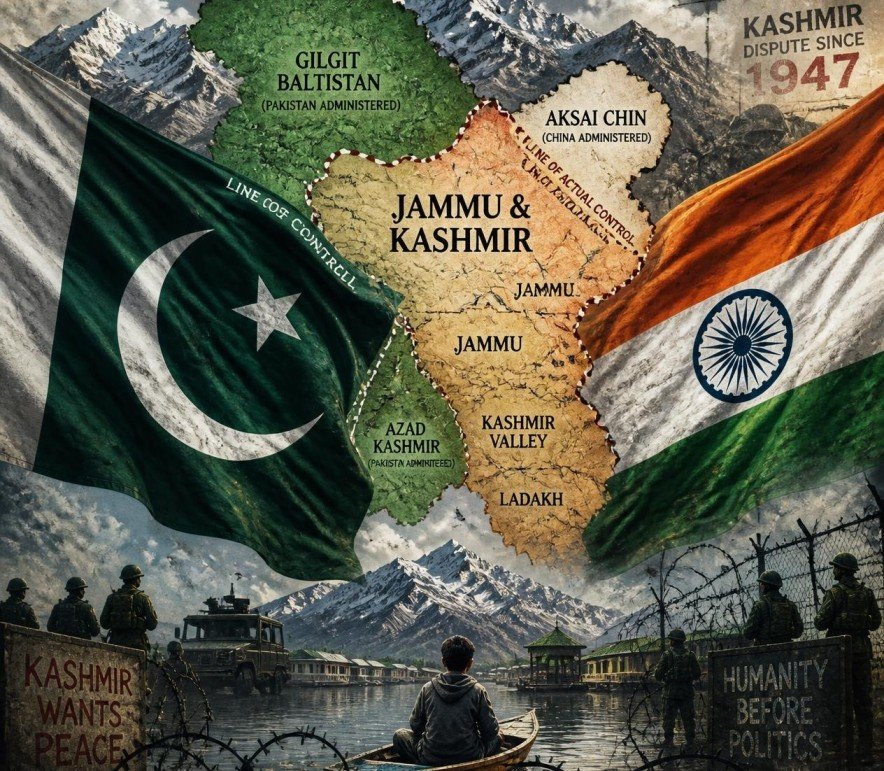
None of these changes the core obstacles that have long stood in the way of normalization. For Pakistan, Jammu and Kashmir remains an unresolved dispute recognized by United Nations resolutions calling for the right of self-determination. India’s 2019 decision to revoke the region’s special status under Article 370 and place it under direct central administration was seen across Pakistan, and by many Kashmiris, as a unilateral move altering the disputed territory’s status without the consent of its people. The communication blackouts and changes to domicile rules that followed only deepened this perception.
The border itself remains a second unresolved question. India and Pakistan do not share a single, mutually agreed and fully demarcated boundary; the Line of Control (LOC) in Kashmir is a ceasefire line, not an international border, patrolled by heavy troop deployments on both sides. Without a comprehensive boundary treaty, the relationship continues to be managed as a frozen conflict rather than a settled one.
Domestic politics compounds the difficulty. Yet the case for dialogue remains strong. South Asia is home to nearly a quarter of humanity, much of it young and eager for opportunity, while trade between the two countries remains far below its potential.
Pakistan has repeatedly stated its willingness to engage in result-oriented talks covering Kashmir, terrorism, water, and trade through a structured process. What is needed now is reciprocal political will from India. The Colombo meeting suggests that even amid public hostility, both sides understand the value of keeping channels open. The US and Iran did not become friends overnight, and no one expects India and Pakistan to either. But diplomacy does not require trust to begin; it requires only the willingness to start talking, formally and consistently, before the next crisis makes that choice even harder.