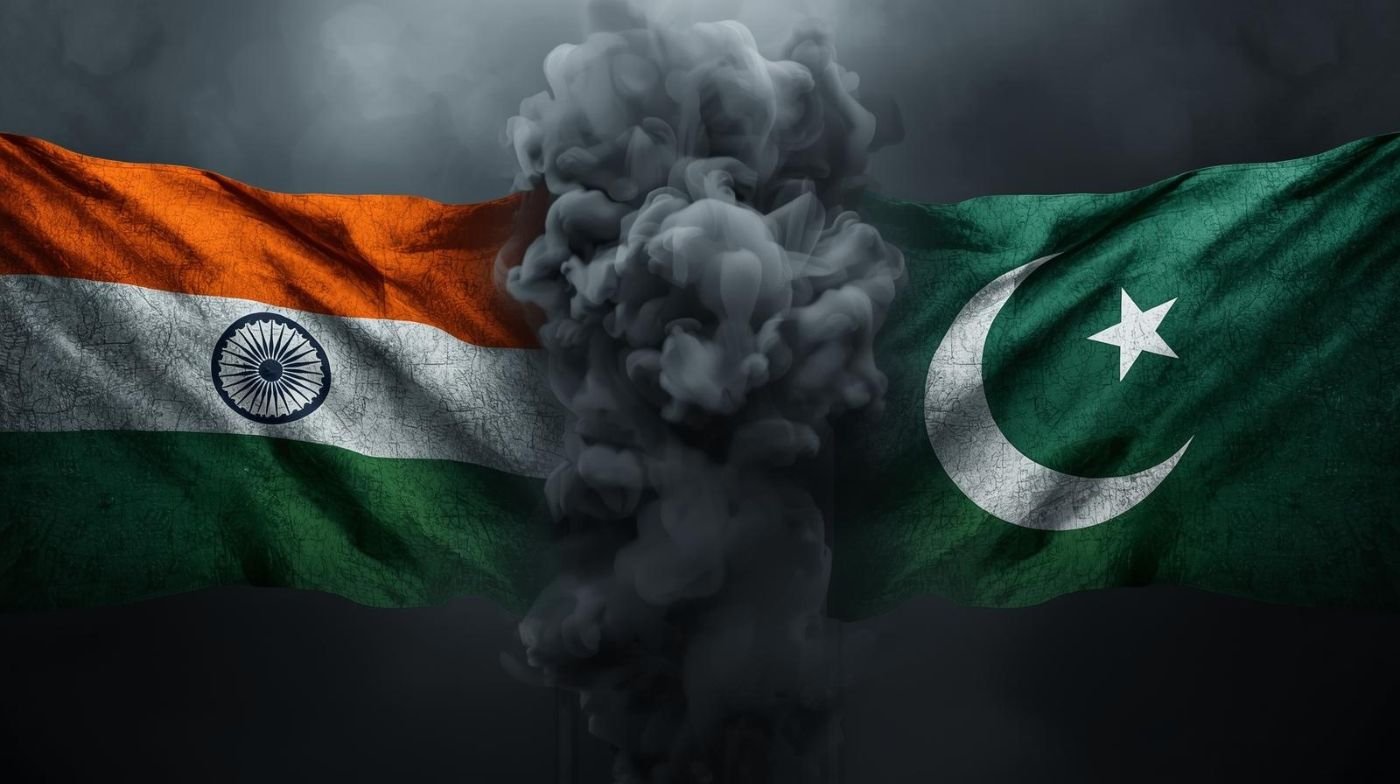
The relationship between India and Pakistan has been one of a long-standing confrontation that dates back to the years of independence in the year 1947. This competition has led to several armed conflicts, in particular, in 1948, 1965 and 1971, and to frequent crises, low level conflicts, and proxy wars. In May of 1998, South Asia became overtly nuclearized and this has completely changed the character of war between the two countries. The nature of hostilities has since that watershed moment shifted away to the full-scale conventional warfare to limited commitments under the nuclear deterrence umbrella. We aim to discuss why India is seeking limited war solutions against Pakistan and the implications of the strategic stability in South Asia.
Conventional War and Nuclear Deterrence
Before nuclearization, both India and Pakistan had conventional wars with the intention of realising decisive military and political results. The coming of the nuclear arms put hard limits on escalation. The full scale war between two states with nuclear weapons may lead to the idea of the Mutual Assured Doom (MAD), where both of the parties would lose everything and nothing will be acceptable. As a result, political and military leaders of both parties have attempted to score goals that would be limited to the nuclear level.
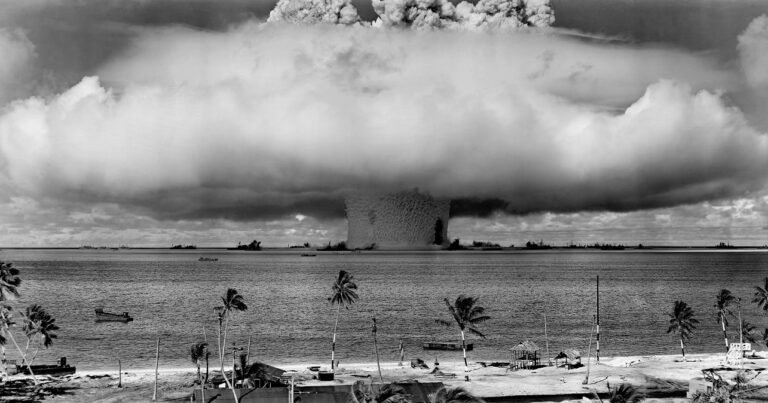
On 18 May 1974, India first tested a nuclear weapon in the Pokhran desert in the cordially named test, Smiling Buddha. This was then preceded by five succeeding underground tests on 11 May 1998, full name Pokhran-II (Operation Shakti). Pakistan retaliated by carrying out its own nuclear tests on 28 May 1998 (Chaghi-I) and 30 May 1998 (Chaghi-II) in the Chaghi hills of Balochistan. These changes created a South Asian nuclear deterrence dyad and fundamentally changed the security of the region.
Kargil War and the Rise of the Limited war
The Kargil conflict of 1999 was the first time that there was a major crisis that involved India and Pakistan since the period of nuclearization. In the Kargil sector, the Pakistani troops had deployed Operation Badr with the aim of interfering with the supply chain of India into Siachen by attacking National Highway 1A. India retaliated by Operation Vijay, taking its time to limit its military intervention to its side of the Line of Control (LoC) to prevent the situation.
In spite of the traditional superiority of India, which was estimated in 3:1 ratio, it actually restricted the extent of its response. India restrained itself mainly due to nuclear deterrence. Finally, Pakistan had to pull out its troops on 26 July 1999 under international pressure and danger of escalation. Although the war did not turn into a full-scale war, it was a big blow to the stability of the strategy because it only enhanced mistrust and promoted doctrinal innovation on both the fronts.
Operation Parakram and Doctrinal Shifts
After the terrorist attack on the Indian Parliament on 13 December 2001, India initiated an operation named Operation Parakram, a massive military build-up along the LoC and the border with Pakistan. About 700,000 Indians soldiers were to be used. The mobilization process however was slow and it took close two months and thus it gave Pakistan ample time to counter and give the signal of its nuclear deterrence.
India eventually did not launch any conventional attack because it understood that it would be viewed as limited war by India yet the threat to existence by Pakistan. In October, 2002, the operation was called off without fighting. This episode also marked the shortcomings of the current military doctrine of India, specifically the Sundarji Doctrine, which focused on deep conventional attacks but which was not that well adapted to quick responses in nuclear circumstances.
Cold Start Doctrine and Pakistani Response
Following the operation parakram, India devised the doctrine of Cold start which is a limited war strategy aimed at fighting beneath the nuclear limit of Pakistan. The doctrine is focused on quick mobilization, shallow offensives, and Integrated Battle Groups (IBGs) to complete small goals in 4872hours. The aim is to sanction Pakistan in other conventional ways without the nuclear build up.
Cold Start was seen by Pakistan as a great danger to its strategic stability and a policy of Full-Spectrum Deterrence (FSD) was adopted. This also involved tactical nuclear weapon (TNW) development, e.g. Nasr (Hatf IX) missile, to counter conventional incursions at tactical and operational level. Although FSD was supposed to reestablish deterrence, it actually reduced the nuclear threshold thus exposing the chances of miscalculation and unintentional escalation.
Crisis Behavior: 2008‑2019
Later crises also demonstrated the mechanisms of limited war with nuclear deterrence. Following the attacks in Mumbai in 2008, India did not engage in direct military vengeance although it held Pakistan based militants responsible. On a parallel note, India carried out so-called surgical attacks across the LoC after the Uri attack in September 2016 with careful calibration to ensure that it would be limited.
The Pulwama crisis of 2019 was a major escalation. On 26 February 2019, India used airstrikes on Balakot, which were described as non-military, preemptive strikes on militant targets. Pakistan retaliated by operation Swift Retort and shot down an Indian plane and took its pilot hostage. Restraint was then taken by both sides highlighting the stabilising though precarious status of nuclear deterrence.
News and Strategic Stability
The recent events, such as the April 2025 attack in Pahalgam and the following one-sided military contacts show that India still wants to have space to engage in limited war without an open confrontation. The Pakistani reactions have also been in the same scenario, in attempts to send a message of determination without occasioning nuclear escalation. Even though India has a policy of No-First-Use (NFU), Pakistan is uncertain, citing the vagueness of its doctrines and the changing capabilities.
In addition to kinetic activities, the scope of competition has extended beyond conventional activities to include non-traditional activities like cyber warfare, psychological activities, information campaigns, and economic pressure. Such operations also make the issue of strategic stability more complicated as it blurs the boundaries between peace and war.
Deterrence, Doctrine, and Limited Conflict
The Indian search of limited war options with Pakistan indicates that India wants to take the form of punishment to perceived provocations without going into the nuclear paradigm. Nevertheless, this course of action puts a major implication to the strategic stability in South Asia. The fact that Pakistan is heavily relying on full spectrum deterrence which involves tactical nuclear weapons enhances the notion that any small scale conflict would escalate to a full-scale war.
As nuclear weapons still serve to create a balance of power and prevent the complete war, constant crises and rivalry in the theory of the doctrine, as well as the close position of the countries, make the region highly unstable. Any mathematical error within this set up may be disastrous and strategic restraint as well as crisis management is something that the region needs in order to have peace.