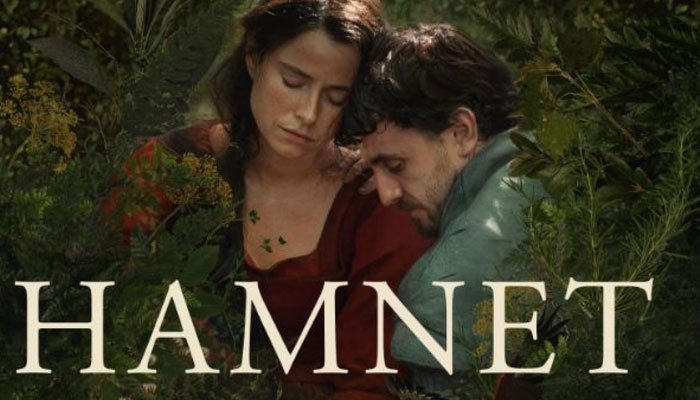
‘Hamnet’: A Powerful New Take on Shakespeare. In the final scene of Hamlet, Shakespeare’s wife Agnes, played with a restless vivacity by Jessie Buckley, goes to see her husband’s new play, Hamlet.
She turns to her brother and says, in a mocking tone: “What are they talking about?”
I was in the same situation, Agnes. I never liked reading Shakespeare in school (and we didn’t even have Chat GPT to translate it at the time), so I wasn’t particularly keen to see a film about the death of one of Shakespeare’s children, especially since I had a child of my own last year. Iambic pentameter and the worst thing I could imagine? No thanks!
So, I didn’t expect to be sitting here telling you that this film should win Best Picture at the Oscars. But that’s what I’m saying, and it should. Yes, ‘Hamnet’, based on Maggie O’Farrell’s Women’s Prize-winning novel, is on the list of emotionally traumatic films I’d never want to watch again (for example: ‘Marley and Me’).
But it struck me in a way that gave me a keen sense of the limitless and vast possibilities of creativity, something that feels so necessary at a time when our attention is being controlled by algorithms and the world feels like it’s on fire.
It’s also a dignified and deeply emotional study of the experience of motherhood, one that has an epic scope and refuses to confine these stories to the small, clean domestic spaces where they are usually kept.
Director Chloe Zhao, who already won an Oscar for ‘No Made Land’ in 2020, and O’Farrell co-wrote the story, and if you think about it, they’ve done a truly extraordinary job.
Greatest Symbol of English Culture
They took the greatest symbol of English culture, perhaps of all history, and through it overturned centuries-old myths about what subjects are considered ‘great art’, who gets the right to make it and what it costs.
For us Brits, ‘Hamlet’ represents our great hope on a global scale and Jessie Buckley is rightly considered the frontrunner for the Best Actress award (even though she and her co-star Paul Mescal are both Irish).
She has already won several awards this awards season and it would be a great injustice if she didn’t win, even if she does treat cats a little harshly.
For years she has been one of our most mature and confident rising talents, consistently making interesting choices: from the strangely terrifying Men to the emotionally intense Elena Ferrante story The Last Daughter, from a rebellious Sally Bowles in the West End to a small but very accurate role in the brilliantly allegorical Women Talking.
Despite a youthful test in a TV talent show, she maintained a bold belief in her own ability and decided to study at the RADA (Royal Academy of Dramatic Art) rather than accept a supporting role in the West End. The gamble she took paid off.
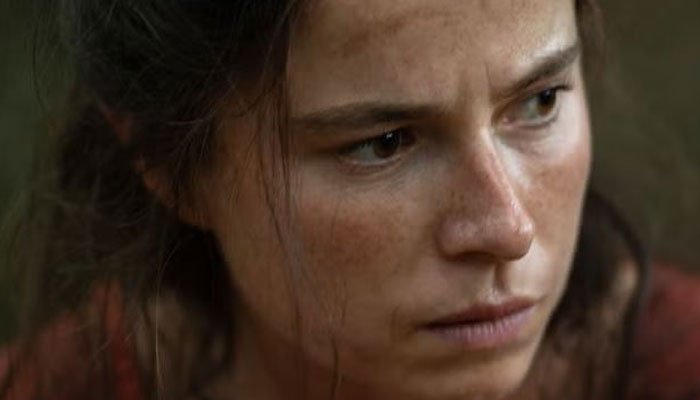
Buckley’s feat is that she seems at every moment more intelligent than her husband, Shakespeare himself. With her dusty face and searching eyes, Agnes seems more attuned to the world and she is also strong as steel.
She gives birth in the forest (without any painkillers)! She gets really upset when her mother-in-law won’t let her give birth to twins in the same forest during a flood.
The Literary Cause
Agnes never gives up, always knows what to do, even when the worst thing in the world happens. It was painful for me to watch the scene when she realizes that hope is lost, that Hamlet is gone, that he has gone to a place of no return, and so is she.
In Shakespeare’s time, the names ‘Hamnet’ and ‘Hamlet’ were used interchangeably, and he wrote ‘Hamlet’ five years after his son’s death. O’Farrell’s insistence that Shakespeare was probably inspired by his own family is crucial: it overturns the well-worn notion that only women make their lives the subject of their work.
It also challenges the idea that great literary men are dedicated to some great literary cause and makes that idea a bit ridiculous. When Shakespeare mumbles about returning to London shortly after Hamnet’s death, Agnes gives him a hard slap in the face. Because obviously. What has he been doing? Wandering around London and writing plays after her child’s death? He felt like the world was somewhere else. Doesn’t he realize that he’s actually here?
Because in ‘Hamnet’ the storyteller is not the bard but a forgotten woman from history, with a face covered in dirt, who bends down into the earth to show her children how things grow, who performs a ritual for their dead bird to comfort them. They believe every word of it.
A Human Film
Zhao said in an interview about “Hamnet” that the actors and crew “felt this film in our bodies” and that making it changed our lives, and that there was something about the film that “felt destined and inevitable.”
There is something truly mysterious about it: beautiful views of trees and roots spreading out and a feeling that you can almost feel the cool, fresh air of a Stratford-upon-Avon morning.
Is it a film that stirs up sorrow, as some critics say? I think not. Is it historically accurate? Probably not. But it is a very human film, one that both humanizes Shakespeare and questions him as a national epic storyteller.