President Harry. S Truman recognized Israel just eleven minutes after it declared independence in 1948.
What’s Behind the Unshakable Partnership Between United States and Israel that it continues to diminish every other relationship? The US-Israel relationship moved from diplomatic recognition of the newly formed Israeli state to one of the closest military alliances of modern international politics. Across different administrations, Americans have disagreed on topics like Climate change, multilateralism, trade. Yet, it never changed on the US commitment to protect Israel militarily, economically, and financially. It was a clear win for the Israeli Lobby in the United States.
This support endured wars, harsh criticism relating to the humanitarian crisis in Gaza, and American policies at home and abroad. The question, therefore, is not why the US supports Israel, but why it supports Israel in such an unwavering manner despite local and global repercussions.
We see it differently and not from a national lens. This support is rooted in sympathy towards Jews after the holocaust, strategic interests of the US, and beliefs of evangelical Christians who see Israel as a biblical-promised land. Pro-Israel organizations like AIPAC, AJC, and ZOA further amplify support through lobbying, campaign contributions, media, and elite networks.
Beginning of US-Israel Relations
Unshakable Partnership Between United States and Israel began very early. The starting point of US-Israel relations was when President Harry. S Truman recognized Israel just eleven minutes after it declared independence in 1948. The relationship deepened in the 1967 Arab-Israeli war, when America supported Israel against Soviet backed regimes. This alliance was strengthened after the large-scale military resupply under President Nixon. Since the 1980s, the alliance has been institutionalized through military aid, intelligence sharing, and the diffusion of military technology.
Evangelical Christians comprise 23-25% of the adult population in the US, giving them significant political influence. They believe that Israel has the biblical right to exist and consider it a promised territory. Thus, Israel has long enjoyed bipartisan support in the US. Pro-Israel organizations like AIPAC, AJC, ZOA, etc. further amplify the support for pro-Israel policies in the US. This influence doesn’t come only from lobbying but also from campaign donations, media control, think tank networks, and long-standing elite connections.
A pillar of the US-Israel relationship is the ideology. Historically, many important figures from the US have made statements about how the US and Israel align ideologically and how they share values. The US views Israel as the only democracy in the Middle East. In this context, Reagan famously describes Israel as “A strategic ally and a force for democracy in the Middle East.” In addition to democratic solidarity, the US commits itself to Israel due to a shared understanding of extremism and promotion of American values.
Israel’s Security: Central Element of US Foreign Policy
Support for Israel’s security has been a central element of US foreign policy, as seen in the ‘Qualitative military edge policy’ of 2008. It highlights the superiority of Israel’s defense and deterrence capabilities among Middle Eastern states to project regional influence. As the main ‘non-NATO’ ally, the US has supplied Israel with $300 billion since 1948 in bilateral aid aimed at deterring hostilities in the Middle East. It also shows Unshakable Partnership Between United States and Israel.
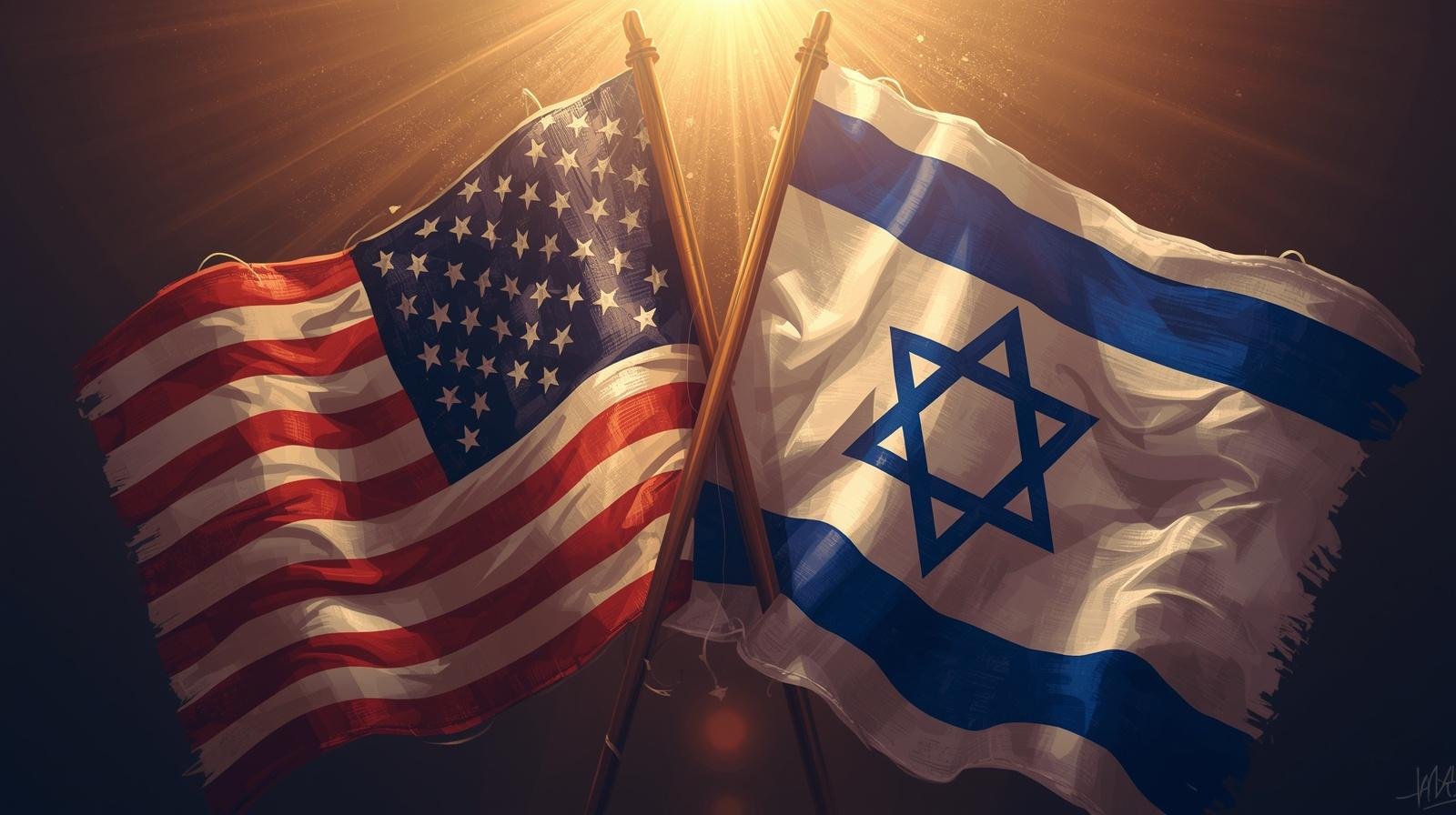
The MOU signed under President Obama in 2016 commits $3.8 billion annually in defense assistance to Israel, including $500 million each year for missile defense. Various agreements, such as the Mutual Defense Assistance Agreement (1952), the General Security of Information Agreement (1982), the Mutual Logistics Support Agreement (1991), and the Status of Forces Agreement (1994), form the foundation of their long-term strategic partnership.
To legitimize Israel’s regional influence, the Trump administration aligned the path through the Abraham Accords (2020), which emphasized stabilizing the Arab-Israel relationship and offsetting Iran’s influence in the region. Though this initiative was secured by economic and military aid, it questioned the double standards of Trump’s liberal order due to the failure to address the Israel-Palestine conflict, which is the greatest humanitarian crisis since World War II and continues to destabilize the region.
United States, Israel and Iran
Since the Islamic Revolution in Iran (1979), Israel and the US have been arch-foes of Iran, which has further fueled the US’s support for Israel. The Iranian leadership has consistently called for Israel’s elimination and has condemned the US for its unwavering backing of Israel. Both countries claim that Iran is trying to develop nuclear weapons and ICBMs, which Iran has vehemently denied.
Trump stated that these missiles pose a threat to American security, whereas US intelligence reports deem the threat non-imminent. Meanwhile, Israel views Iran as a threat to its existence and an obstacle to its vision for ‘Greater Israel’, as Iran supports proxies like Hamas in Gaza and Hezbollah in Lebanon. Therefore, the perceived threat from Iran further legitimizes US support for Israel.
Although the historical patterns, ideological alignment, military cooperation, and shared interests make this bond unshakeable, there are some limitations. Many analysts argue that the current Israel-US-Iran conflict mainly benefits Israel, not the US. Additionally, the shifting rhetoric towards supporting Israel among Americans raises doubts about the longevity of this partnership.
Iran War: Setback for the American Public
This change in rhetoric is clear from the fact that only 21% of respondents in a recent University of Maryland survey expressed support for war with Iran. Trump’s embrace of regime change rhetoric in Iran is yet another victory for Netanyahu and a setback for the American public, as it indicates the US may be committed to a war on behalf of Israel. Trump justified intervention by claiming it was necessary to protect American national security, whereas such skepticism reflects a broader shift in public opinion that may gradually influence Washington’s foreign policy.
In conclusion, the partnership between the US and Israel remains strong, but its long-term durability may depend on evolving public sentiment in the United States, the continued influence of Israeli lobbies, and the level of bipartisan support within the U.S. Senate.
NOTE: Mr. Taha Jabbar, a scholar of International Relations at the National Defence University, focusing on security, geopolitics, and conflict studies also contributed to this piece.