The 12 seats are not a privilege for the few. They are a promise to the many and a constitutional record that nearly half a million displaced Kashmiris exist.
The demand to abolish the 12 refugee seats in AJK’s Legislative Assembly deserves scrutiny that goes far beyond local politics. Every institutional symbol that links displaced Kashmiris to an unresolved dispute weakens India’s preferred narrative of permanence and finality. Removing those symbols from within, voluntarily, under street pressure does what decades of Indian diplomacy could not achieve at the United Nations.
The 12 seats reserved for Kashmiri refugees in the 53-member AJK Legislative Assembly are at the heart of the current crisis. The now-proscribed Joint Awami Action Committee (JAAC) has made their abolition one of its central demands, fueling weeks of protest that turned violent in Rawalakot on June 7, 2026, killing at least eleven people and injuring 23 law enforcement personnel. But to understand why this demand is so deeply damaging not just to AJK’s stability, but to the Kashmir cause itself one must understand what these seats represent and who they speak for.
AJK Legislative Assembly: Composition of 53 Members
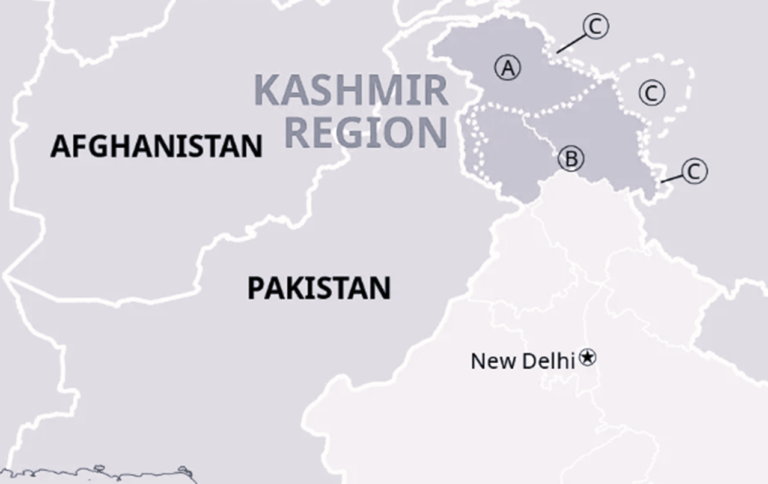
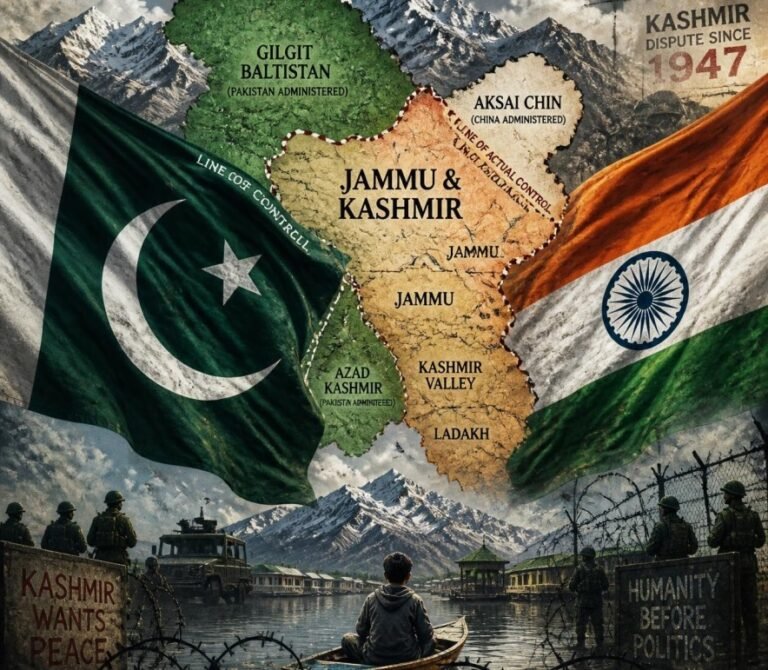
The 53-member AJK Legislative Assembly is made up of 33 directly elected seats from within AJK, eight reserved seats for women, technocrats and overseas Kashmiris, and 12 seats allocated to Kashmiri refugees settled across Pakistan in cities like Karachi, Lahore, Rawalpindi and Sialkot. Six of these 12 seats represent refugees from the Jammu division, a population estimated at around 434,000 people. The remaining six represent refugees from the Kashmir Valley, estimated at approximately 30,000. These are men, women and families who were displaced from their homes in Indian Illegally Occupied Jammu and Kashmir (IIOJK) following the conflicts of 1947 and 1965. They did not leave by choice. They were pushed out by war, occupation and fear. The 12 seats are their only political voice.
The legal foundation of this representation is not recent and is not fragile. On June 7, 2026, the AJK Supreme Court issued a detailed advisory opinion on a presidential reference filed under Article 46-A of the Interim Constitution 1974. The court ruled unambiguously that the 12 refugee seats are protected under Article 22 of the AJK Constitution and cannot be altered, reduced or abolished through any executive or administrative measure. The court traced the legal roots of this arrangement all the way back to legislation enacted in 1960, 1964 and 1970, through the interim constitutional framework and the 1974 Constitution and the 1975 Act. Any change, the court stated, requires a formal constitutional amendment under Article 33 meaning it is a matter for elected representatives in the assembly, not for street pressure or protest movements. The court was direct: constitutional supremacy outweighs street agitation.
Refugee Seats Crisis
The AJK Legislative Assembly had already passed a resolution the day before the Supreme Court opinion, firmly retaining the seats and stating that refugee representation is a historical and constitutional reality. The All-Parties Conference convened in Muzaffarabad also rejected the JAAC demand unanimously, making clear that constitutional reform is the exclusive mandate of elected representatives not of organizations that, notably, boycotted the conference altogether.
The geopolitical consequences of abolishing these seats would be severe and immediate. Pakistan’s entire diplomatic and moral position on Kashmir rests on two connected arguments: that Kashmiris were never given their promised right to self-determination under United Nations Security Council UNSC resolutions, and that the people displaced by Indian occupation remain an active party to the unresolved dispute not a settled, forgotten chapter of history. The 12 refugee seats are the institutional expression of that second argument. They tell the world, in the language of constitutional law, that nearly half a million displaced Kashmiris in Pakistan have not accepted the finality of their displacement. They are still waiting. The cause is still alive.
India’s Delimitation of Constituencies Bill 2026
This is precisely where India’s strategic interest quietly enters the picture. New Delhi does not need to fire a single shot to benefit from the abolition of these seats. It simply needs to wait. In April 2026, India introduced the Delimitation of Constituencies Bill 2026, proposing to reserve 24 Indian parliamentary seats for AJK to be kept vacant until Indian control is established.
The bill is an act of legal aggression, a claim that AJK belongs to India dressed in the language of electoral procedure. Pakistan’s diplomat Gul Qaiser Sarwani rebutted it firmly at the UN General Assembly on June 6, 2026, reaffirming that IIOJK remains an internationally recognized dispute on the agenda of the UN Security Council. But here is the uncomfortable truth: Pakistan’s rebuttal carries full weight only when AJK itself is treating the displaced Kashmiris as permanent, protected political stakeholders.
Refugee Seats and Kashmir Dispute
The moment AJK removes those 12 seats even through domestic pressure, even without Indian involvement. India gains a diplomatic windfall it could not have manufactured on its own. It can point to AJK’s own constitutional process and say: even Islamabad’s Kashmir has stopped counting the displaced. The dispute is settled. The refugees have been forgotten. There is nothing left to resolve.
That is the real cost of abolition not merely a domestic political concession, but the quiet surrender of Pakistan’s strongest moral argument at every international forum where the Kashmir cause still lives. The AJK Supreme Court, the AJK Legislative Assembly, and every mainstream political party that attended the All-Parties Conference in Muzaffarabad understood this. They held the line not out of stubbornness, but out of strategic clarity. The 12 seats are not a privilege for the few. They are a promise to the many a constitutional record that nearly half a million displaced Kashmiris exist, that their displacement was not voluntary, and that the world is not yet free to look away. As long as those seats stand, the cause stands with them. And that is exactly why some would prefer to see them gone.