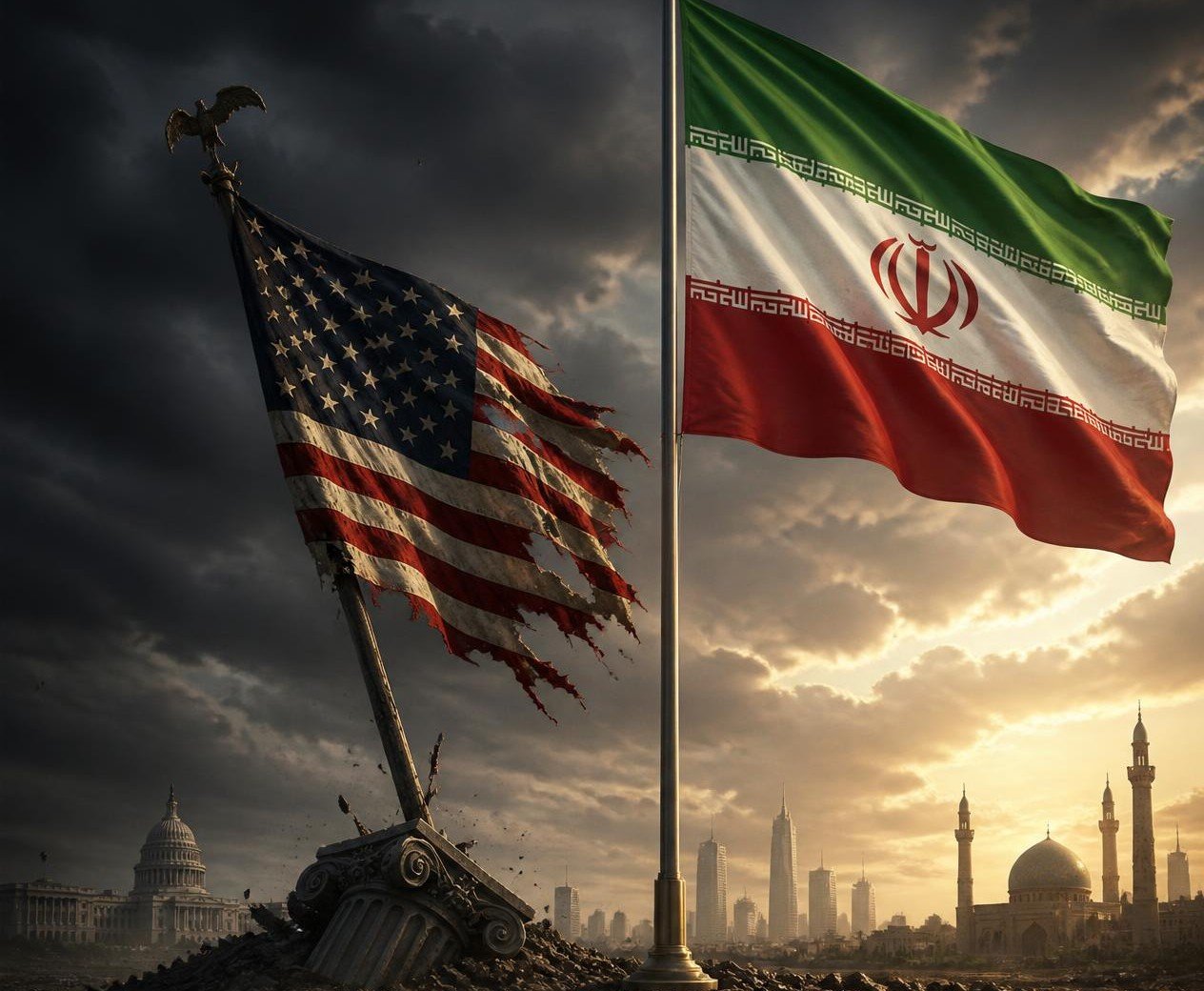
Washington and Tehran have a strong reason to find a deal. Without one, the U.S. could lose its hegemony faster than people expect.
If the US and Iran get stuck in a long war, the real winners won’t be Tehran. It will be Beijing and Moscow. A war between the U.S. and Iran won’t end American hegemony, but it would speed up the shift towards the multipolar world that US wants to avoid. Iran has nothing left to lose right now. The Islamic Republic is already dealing with harsh sanctions, secret attacks, and repeated military strikes on its land and allies.
Another war wouldn’t make things any worse for them. The U.S., on the other hand, is risking its hegemony. If the U.S. gets stuck in a long fight with Iran that doesn’t go its way, it won’t just face challenges it could speed up the end of America’s hegemony in world affairs. And since the world doesn’t have a central authority, a multipolar power structure doesn’t bring peace. It brings more uncertainty, more competition, and a higher chance of big countries clashing. That’s why both Washington and Tehran have a strong reason to find a deal. Without one, the U.S. could lose its hegemony faster than people expect, and Iran could face huge destruction.
Unequal Risks for United States and Iran
Let’s be clear about the imbalance. Iran is already in a tough spot. It has faced years of sanctions, the killing of its top nuclear scientist, the death of General Qassem Soleimani, and constant cyber and physical attacks. Its economy is in trouble, but its leaders have shown they can keep going. From Tehran’s point of view, a full war with the U.S. would be bad but it’s not much different from what they’re already dealing with. In fact, the idea of a conflict might even help the regime by uniting people at home.
The U.S. is in a completely different situation. Washington still protects Europe, the Middle East, and Northeast Asia. The dollar is still the main currency used around the world. The U.S. navy keeps watch over global shipping routes. A long, unclear war with Iran could threaten all of this not because of one big loss, but because of a slow, noticeable weakening of trust and power. A good example of this is the Vietnam War, the Iraq War, and the war in Afghanistan.
In each of these cases, the U.S. didn’t lose a major battle, but the long, expensive wars slowly hurt its global standing. In Vietnam, even with strong military forces, the U.S. couldn’t win, which led to problems at home and made other countries question its strength.
The Iraq War also cost a lot of money and hurt America’s reputation, making allies less willing to back U.S. plans. The war in Afghanistan showed the same pattern, as its ending made people doubt how committed the U.S. really was. These examples show that long wars can weaken American power, strain relationships, and make enemies more confident.
How a Prolonged War Accelerates Multipolarity and Then Chaos
Multipolarity isn’t happening because of a U.S.-Iran war. It’s already starting to take shape. China’s growing power, Russia’s push for more influence, and the independent actions of countries like Turkey, India, and Saudi Arabia have been weakening the U.S.-led global order for years.
But a long conflict in the Persian Gulf would speed things up a lot. Here’s how it would work. First, military overextension: the U.S. would have to move ships and planes from the Pacific to the Middle East, giving China more room to act in the South China Sea and near Taiwan.
Second, economic pressure: a long war would make oil prices go up, helping Russia and Iran but hurting European and Asian allies.
Third, and most important, changes in how people see things: when other countries see the world’s top power stuck in another endless war in the Middle East, they start acting differently.
China builds stronger ties with Gulf nations. Russia increases its military support for Iran. India and Turkey pursue more independent foreign policy together this would accelerate transition. Then comes the danger that most people don’t see.
According to neorealism, especially the offensive realism of John Mearsheimer, the world is chaotic and without a central authority. In a system where one country is clearly in charge, big wars are less likely. But when there are several strong countries, things get much more unstable. No one trusts each other.
They all try to gain more power. They make mistakes. And historically, having many strong powers has led to more conflicts than having just two or one. A world with many powerful countries, especially if the U.S. is weaker, won’t be a peaceful group working together.
It’ll be a tense situation where China, Russia, India, a nuclear Iran, and a still-powerful but weakened America, all watch each other closely. That’s not a balance of power. It’s a setup for trouble.
Counterargument: Hasn’t the U.S. Survived Long Wars Before?
A skeptic might say: “The U.S. went to war in Iraq and Afghanistan and still stayed the top power. Why would a war with Iran be any different?” The key difference is the situation today. In 2003, when the U.S. invaded Iraq, China wasn’t a major rival. Russia wasn’t a threat either.
The world was clearly dominated by one superpower. Now, China has the biggest economy in the world. Russia has already pushed back against NATO in Ukraine. If the U.S. got into a long war with Iran now, it wouldn’t be happening in isolation it would be happening while other big powers are watching for a chance to act. That’s what makes this situation much riskier than past conflicts in the Middle East. Another skeptic might say, “But Iran would be destroyed. Its leaders wouldn’t take that risk.”
This misses the point of “having nothing to lose.” Sometimes, regimes that feel they’re being slowly crushed by sanctions or secret actions might decide that a big war is better than a slow death. That choice might not be right, but it’s not crazy.
Conclusion: The Case for Negotiation Before It Is Too Late
None of this means a war between the U.S. and Iran would immediately end America’s hegemony. Hegemony isn’t something you can just turn off like a light. It’s more like a fire that burns slowly over time. But if the conflict dragged on without a clear winner, it would make that fire burn even faster.
This could speed up the move toward a multipower world. And since a chaotic, multipolar system leads to a lot of uncertainty, competition, and chances of mistakes, the most likely result isn’t a calm new order it’s more chaos. That’s why both Washington and Tehran should try to make a deal. For the U.S., settling things through talks helps keep its influence and stops enemies from taking advantage of a distracted superpower.
For Iran, a deal avoids huge damage and gives a way to come out of isolation. Neither side will get everything they want. But the other option isn’t winning. It’s a slow, messy breakdown leading to a world where many big powers are watching each other in a chaotic situation. That’s a world neither can afford.