The recent statement of US Ambassador to India opens up a pandora box, again.
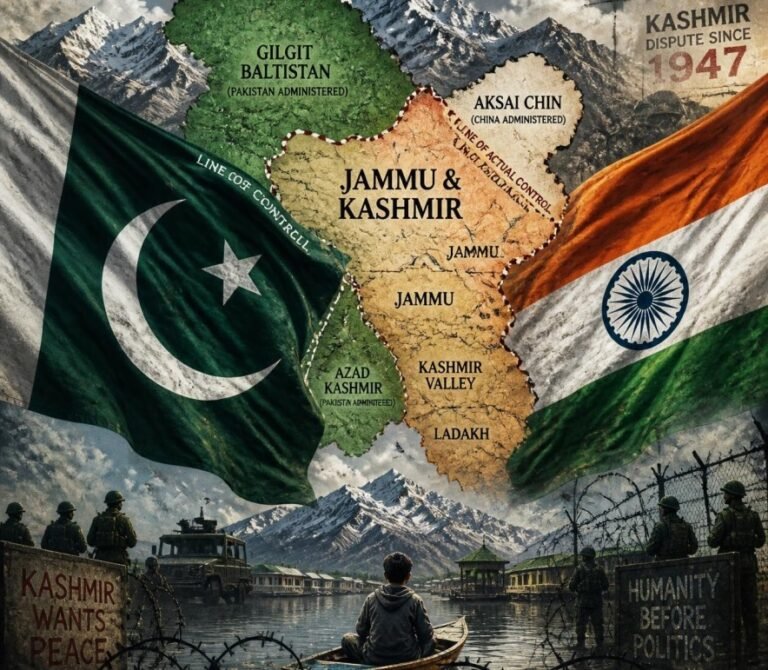
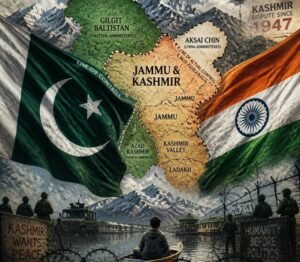
Kashmir Faces War of Information as the voice of Kashmir looks out to share its story. However, it is often represented by foreign diplomats, external actors or entities outside of Kashmir, when it comes to Indian Illegally Occupied Jammu and Kashmir.
On August 19, a sentence spoken in Srinagar travelled far beyond the Valley. During his first visit to Indian Illegally Occupied Jammu and Kashmir, U.S. Ambassador to India Sergio Gor described the region as “an important part of India.” Pakistan promptly protested, while Indian officials and media largely welcomed the remarks. But perhaps the more important question is not what Ambassador Gor meant.
This is why the words of a foreign diplomat became another chapter in the long-running diplomatic contest over Kashmir. The answer lies partly in what has become an overlooked dimension of the Kashmir conflict: the information war.
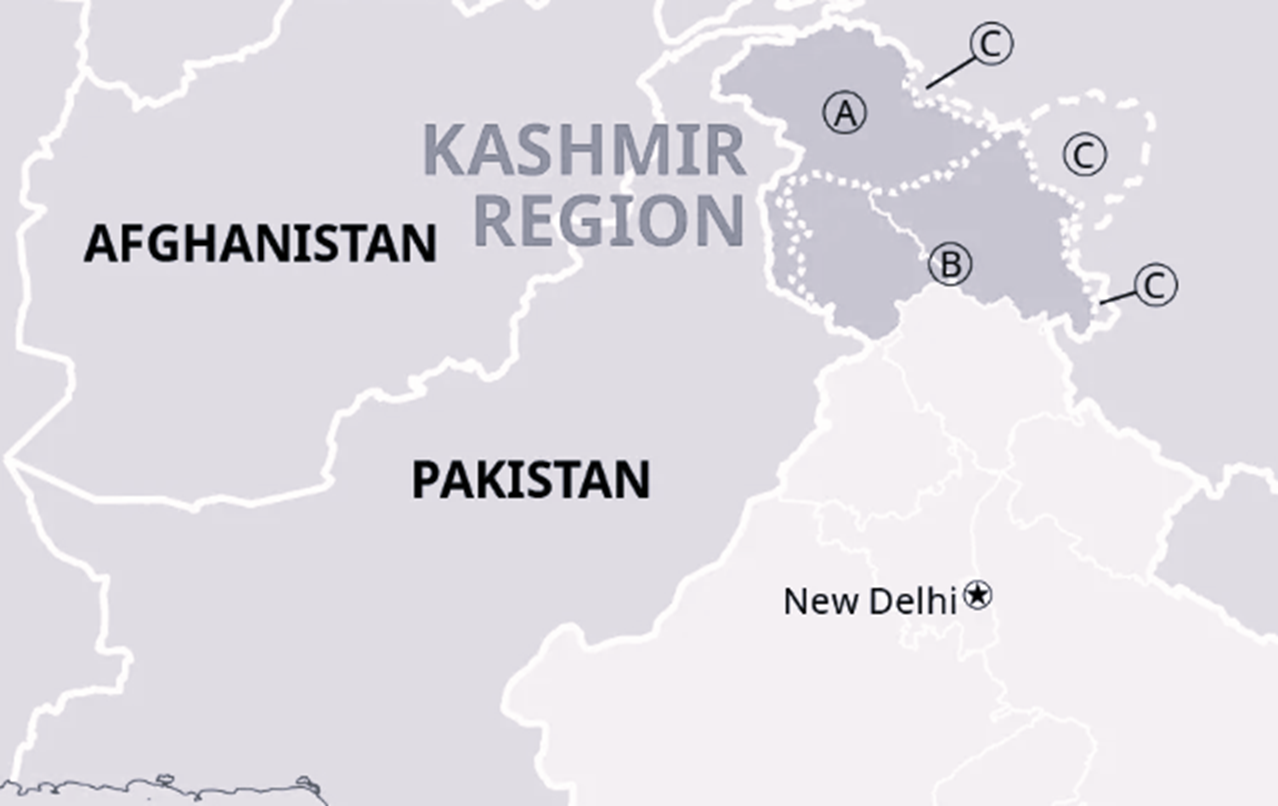
Kashmir: An Unresolved Dispute
Kashmir is not only contested on the ground. It is contested in newsrooms, diplomatic statements, social media feeds and international forums. India presents a narrative of integration, security and development. Pakistan emphasizes the unresolved dispute, human rights and the right to self-determination. Between these competing narratives, however, there is another voice that is too often reduced to an afterthought: that of Kashmiris themselves.
This does not mean that Kashmiris share a single political position. They do not, as evident by the recent disagreement between Jammu and Kashmir Chief Minister Omar Abdullah and PDP leader Mehbooba Mufti, embodying that their political aspirations, experiences and grievances are diverse. That diversity is precisely why independent journalism and space for local voices matter. Yet when access to information is restricted, the space available for those voices inevitably narrows.
The problem is not limited to whether information is true or false. Information warfare can operate more subtly through selective visibility: deciding what is reported, what is omitted, whose testimony is amplified and whose is dismissed. The restrictions faced by journalists in Indian Illegally Occupied Jammu and Kashmir have continued into 2026.
Long Gone Media Freedom
In January, multiple journalists were summoned by police over their reporting, with the International Federation of Journalists reporting that one journalist was pressured to sign an undertaking promising not to report on “controversial” topics. Srinagar-based Hindustan Times correspondent Ashiq Hussain was also summoned by police in connection with his reporting.
These restrictions have consequences beyond journalism. When independent reporting becomes difficult, the outside world increasingly encounters Kashmir through official statements and carefully managed visits. This is where Ambassador Gor’s visit becomes significant, not because one diplomat can determine Kashmir’s future, but because it illustrates the power of international perception.
A foreign diplomat visiting Srinagar does not encounter Kashmir in a vacuum. What they see, whom they meet and what information reaches them, all influence the picture they take home. When that picture is subsequently communicated to an international audience, it can reinforce a particular understanding of the conflict.
The same problem, however, exists beyond Indian-administered Kashmir. Pakistan, too, cannot claim complete immunity from the politics of information. Recent restrictions placed on foreign media and reporting in Pakistan, including requirements affecting journalists working outside major cities, have raised concerns among press-freedom organizations. This matters because credibility in an information war cannot be demanded; it has to be earned.
Story of Information Divide
This brings us to the question of how states can address the information divide. If Pakistan wants the international community to listen to Kashmiri concerns, it must also support an environment in which journalists can report freely. The same standard must apply to India.
In March, India rejected allegations concerning Jammu and Kashmir at the UN Human Rights Council as “baseless and politically motivated,” reflecting its broader reluctance to engage with international criticism of its record in the region.
If India wants the international community to accept its narrative of normalcy and development, it must be willing to allow independent scrutiny of that narrative, including greater access for journalists and international observers. And if international actors genuinely seek to understand Kashmir, they must listen to more than the governments on either side.
Ultimately, the Kashmir conflict is not only a struggle over territory or political status only. It is also a struggle over who gets to define reality. As Kashmir Faces War of Information. Perhaps the question the international community should be asking is therefore not simply: Who controls Kashmir? It is also: Who controls the story of Kashmir and, more importantly, whose voices are missing from it?